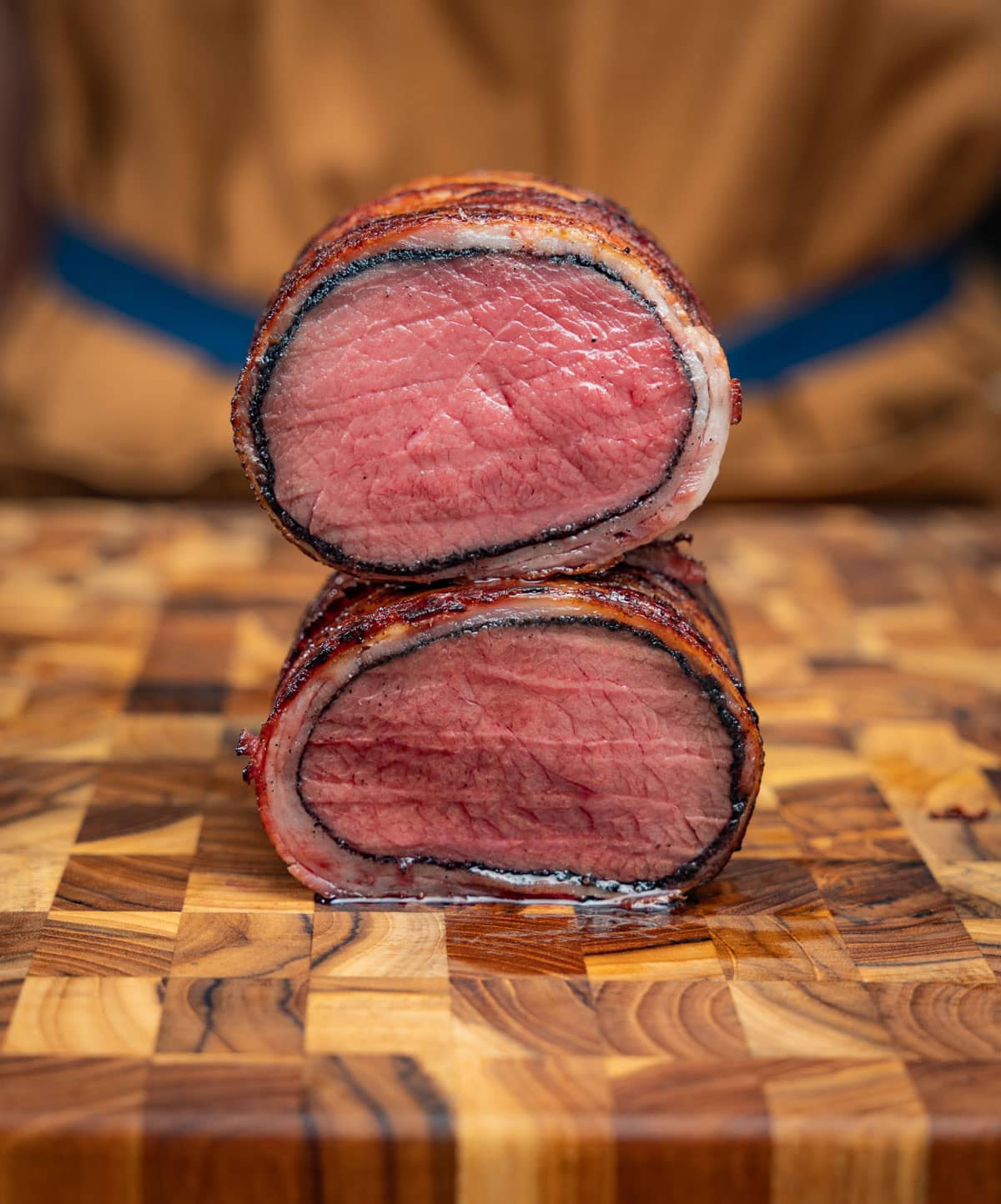
Bacon Wrapped Venison Backstrap In Oven Recipe
This bacon-wrapped venison backstrap is rolled in thin bacon, seared until the bacon is browned, and finished gently to keep the center rare to medium-rare. It is a simple way to cook venison loin with crisp bacon and a perfect internal temperature.
Ingredients
For the Backstrap
- 1 venison loin (cut into about an 8-inch piece and the silver skin removed)
- 1 twelve-ounce package of thinly sliced bacon
- kosher salt
- ground black pepper
- 1 tablespoon of cooking oil
For the Ginger Scallion Sauce
- 2 tablespoons olive oil
- 2 tablespoon butter
- 3 tablespoons minced ginger
- 1 garlic clove, minced
- ½ teaspoon crushed Sichuan peppercorns
- ¼ teaspoon chili flakes
- 1 cup thinly cut scallions
- 1 tablespoon rice wine vinegar
- 1 teaspoon soy sauce
- ½ teaspoon sugar
- Salt to taste
Instructions
For the Backstrap
- Preheat your oven to 225 degrees F.
- On a food work surface, lay out about a 2-foot by 2-foot sheet of plastic wrap. You can use two sheets and overlap them to reach these dimensions.
- On the plastic wrap, lay out the strips of bacon while overlapping the edges of the bacon by about a ¼ inch. Depending on the width of your bacon and the length of your deer loin you may not need the entire package.
- Place the venison on a cutting board or baking sheet. Season and roll it around to ensure that the tops and sides of the backstrap are coated. Shake off and excess seasoning.
- Place the venison on top of the bacon towards the end that's closest to you. Use the plastic wrap to help roll the bacon around the meat. You can gently stretch the bacon around to help secure it.
- Heat a heavy-bottomed pan (preferably a large cast-iron skillet) over medium heat and add the cooking oil.
- Once the oil starts to shimmer, add the meat to the pan with the bacon seam side down and cook until the bacon is golden brown on that side. Gently roll the meat over and brown on all sides.
- If you haven't already reached your desired internal temperature, transfer to the preheated oven seam side down to finish cooking. Keep a close eye on the meat so that it does not overcook. The easiest way to do this is by using an instant-read meat thermometer.
- Once the meat is cooked remove it from the heat source and place it on a cutting board or wire rack. Let the meat rest at room temperature somewhere between 12 and 15 minutes before slicing into it. Slice and serve with the ginger scallion sauce or sauce of your choice.
For the Sauce
- Heat the olive oil and butter in a saucepan over medium heat.
- Add the ginger, garlic, peppercorns and chili flakes. Cook for about 2 to 3 minutes.
- Add the remaining ingredients and cook for another 2 to 3 minutes. Check for seasoning. Add salt if needed.
- Let cool slightly and pour the mixture into a container. If you're going to eat this sauce cold, I recommend checking for seasoning as cold food tends to need more salt.
NOTES
- Wrap it tightly and chill it. After rolling the backstrap in bacon, wrap it tightly in plastic and refrigerate it for 8 to 12 hours so the bacon holds better during cooking.
- Use a whole backstrap section. The post recommends an 8-inch piece of venison loin and specifically says not to use a small loin section or tenderloin if you want a cool red center and properly cooked bacon.
- Season the meat, not just bacon. Salt and pepper the venison itself before rolling so the backstrap is seasoned all the way through. The post also notes dry seasonings work better than wet marinades here because extra moisture can keep the bacon from sticking.
- Start seam-side down. Put the wrapped backstrap into the hot pan with the bacon seam facing down first so it sets and stays together as you brown the rest of the outside.
- Brown the bacon before placing in oven. Sear the roll in a heavy pan over medium heat until the bacon is golden on all sides, then move it to a 225 F oven only if it still needs more time to reach your target doneness.
- Cook by temperature, not time. The post recommends using an instant-read thermometer and notes that a reverse-sear finish works well if you pull the venison to around 120 F, then finish until it reaches 125 to 130 F.
- Rest before slicing. Let the backstrap rest for 12 to 15 minutes before cutting so the juices settle and the slices stay cleaner.
Nutrition
Calories: 739kcal | Carbohydrates: 7g | Protein: 26g | Fat: 68g | Saturated Fat: 22g | Polyunsaturated Fat: 10g | Monounsaturated Fat: 32g | Trans Fat: 0.5g | Cholesterol: 122mg | Sodium: 951mg | Potassium: 505mg | Fiber: 1g | Sugar: 2g | Vitamin A: 661IU | Vitamin C: 7mg | Calcium: 41mg | Iron: 3mg
Nutrition information is automatically calculated, so should only be used as an approximation. Nutrition is per serving.
Make this recipe?Mention @Larry__White or tag #WildGameGourmet!