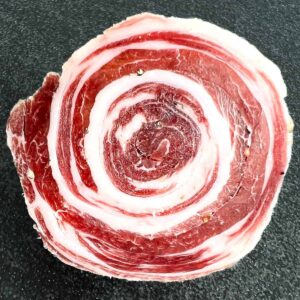
Homemade Pancetta
This homemade pancetta is cured with black pepper, juniper, fennel, and herbs. Perfect for sandwiches, salads, soups and bean dishes.
Ingredients
For the Pork
- 5 pound pork belly (skin on or off)
For the Cure
- 3 ounces Kosher salt (85 grams)
- 1 teaspoon 6 grams pink curing salt, Instacure #2
- 2 tablespoons ground black pepper (for the cure)
- 2 tablespoons brown sugar
- 2 tablespoons juniper berries crushed
- 2 teaspoons fennel seeds cracked
- 4 garlic cloves minced
- 4 bay leaves chopped
- 4 sprigs fresh thyme
- 2 sprigs fresh rosemary
For Seasoning after curing
- 1 tablespoon ground black pepper
Instructions
- Combine all of the cure ingredients except the 1 tablespoon of black pepper for dusting in a bowl. Stir well.
- Rub the cure all over the pork belly.
- Place the pork belly into a zip-top plastic food storage bag.
- Refrigerate for 5 days, flipping the meat and redistributing the cure as it firms.
- Remove the pork belly from the bag and rinse well with cold water to remove the cure.
- If weighing for doneness, weigh the belly now and record it.
- Dust the inside with the remaining black pepper, then roll the belly tightly with the fat or skin side facing outward. Tie tightly with butcher's twine.
- Hang the meat in your refrigerator or curing chamber with good airflow around it.
- Let it hang for 2 to 3 weeks, or until it has lost 30 percent of its recorded weight.
NOTES
- Use Instacure #2, not #1. Pancetta is a longer dry-cured project, so this is the correct curing salt for the job.
- Wild boar belly dries faster. It is usually leaner than farmed pork belly, so start checking it earlier during the drying stage.
- A scale helps. Time gives you a range, but weight loss gives you a better read on doneness. Aim for about 30 percent weight loss after curing.
- Roll it tight. A tight roll dries more evenly and gives you cleaner slices later. If it loosens up, tie it again.
- A regular refrigerator works. Pancetta is one of the easier cured meats to make at home as long as it has space and airflow around it.
- You can cook it after the cure. The extra 2 to 3 weeks of drying are for better texture and more concentrated flavor.
- Wrap it well after drying. Keep it in the refrigerator for short-term use or freeze it in smaller pieces so you only thaw what you need.
Nutrition
Calories: 2402kcal | Carbohydrates: 10g | Protein: 43g | Fat: 242g | Saturated Fat: 88g | Polyunsaturated Fat: 26g | Monounsaturated Fat: 112g | Cholesterol: 327mg | Sodium: 7206mg | Potassium: 924mg | Fiber: 1g | Sugar: 5g | Vitamin A: 111IU | Vitamin C: 4mg | Calcium: 65mg | Iron: 3mg
Nutrition information is automatically calculated, so should only be used as an approximation. Nutrition is per serving.
Make this recipe?Mention @Larry__White or tag #WildGameGourmet!