
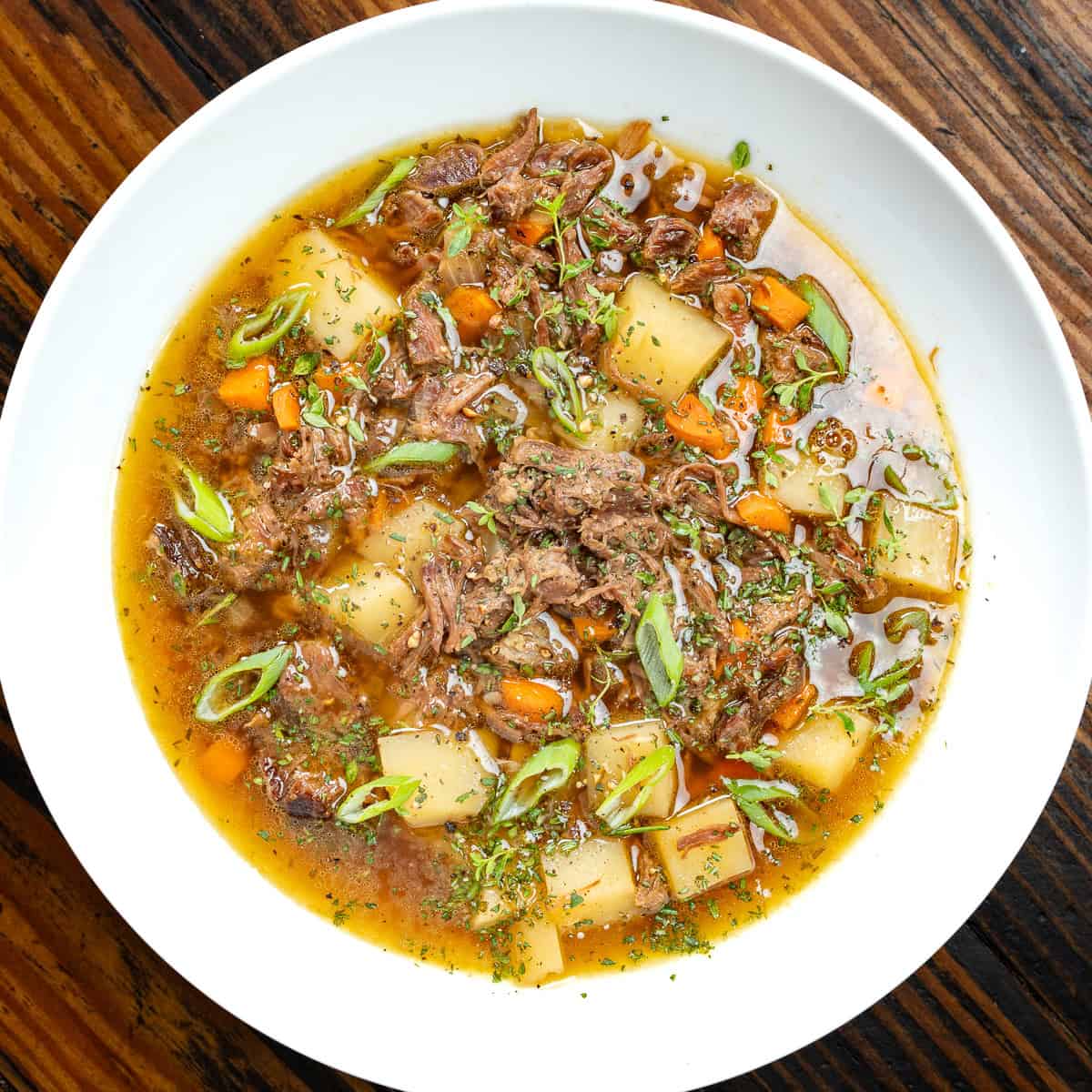
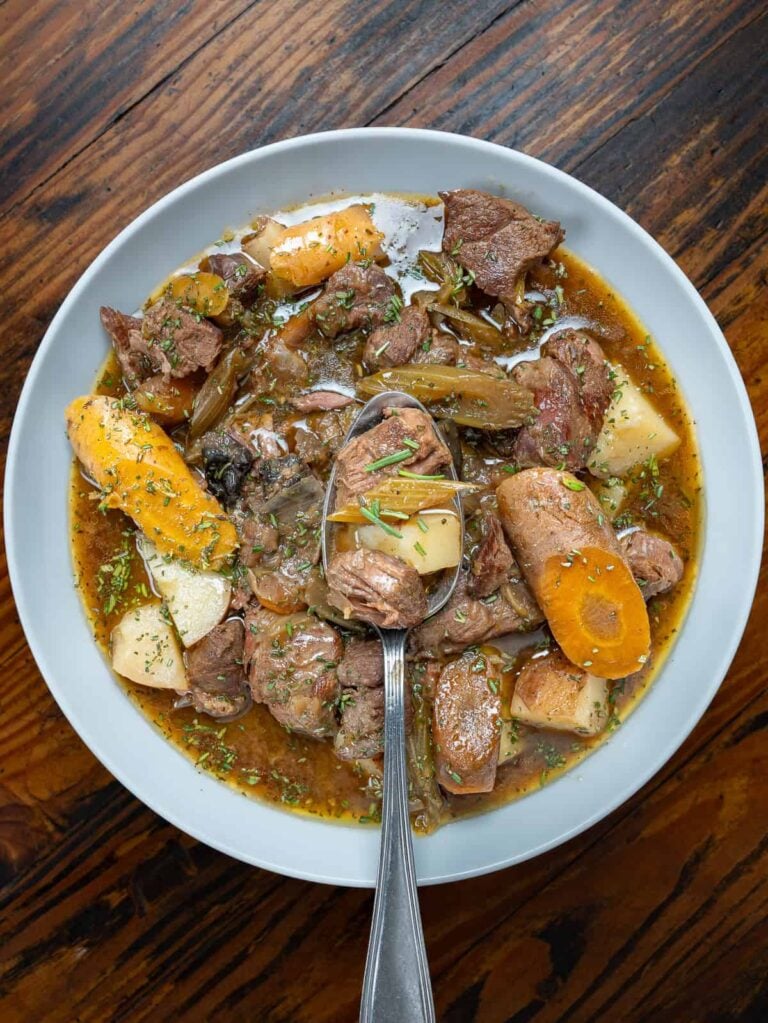
This venison stew recipe is my stovetop version that’s perfect for tougher deer cuts like neck, shoulder, and shank. This meat is cooked until fork-tender first, then uses that flavorful cooking broth for the potatoes and carrots. This method lets you control the texture of the vegetables so that they don’t overcook.
I use white wine, soy sauce, and a splash of cider vinegar to give the broth plenty of umami flavor without making it as heavy as my slow cooker venison stew.
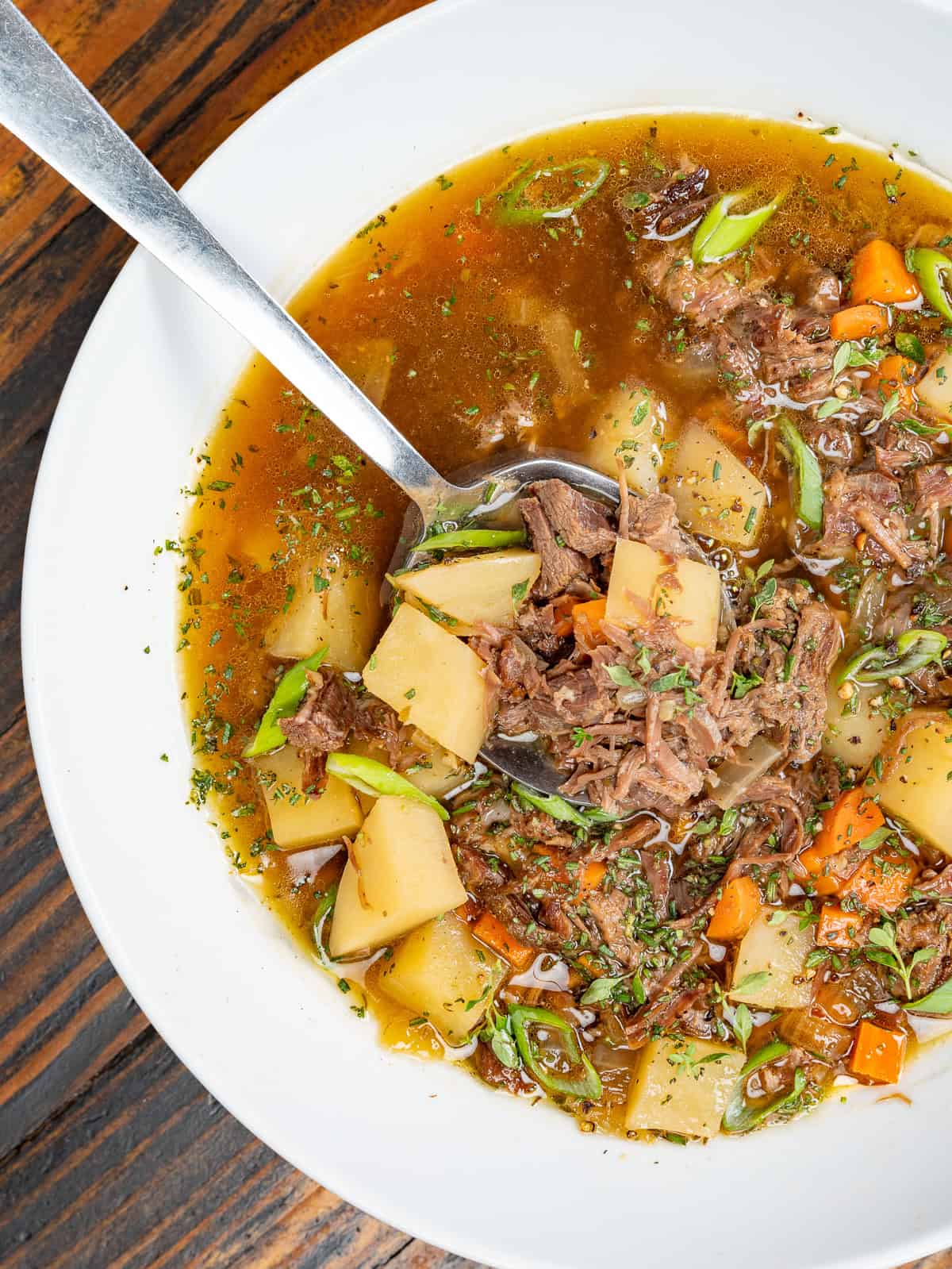
Quick Look: Venison Stew
- What this recipe is: Stovetop venison stew with tender shredded deer meat, potatoes, carrots, and a savory broth.
- Ready in: About 5 hours
- Serves: 4 to 6
- Calories: 501
- Main ingredients:
- Cook method: Stovetop
- Why my version stands out: The venison and vegetables cook in two stages so each reaches the right texture.
- Good to know: Smaller pieces of lean venison stew meat can cook considerably faster than tougher braising cuts full of connective tissue.
SUMMARIZE & SAVE THIS CONTENT ON
I honestly hesitated to share this venison stew recipe because there are countless versions out there. They vary in the type of meat (most simply call for “stew meat”). And depending on who did the processing, this can mean meat from hind quarter cuts, venison round steaks, shanks, necks, or shoulders.
And then theres variations for adding wine and to thicken it like in my red wine venison stew. So after tinkering with this recipe over the years, this is the stovetop version that my family and taste testers landed on. Its not too light, nor too heavy. It’s not the same old deer stew you see in every cookbook, and yet it’s not miles away from being considered classic either.
Why This Recipe Works
- The venison is cooked first. Tough braising cuts have plenty of time to become fork-tender before anything else has to worry about overcooking.
- The vegetables are cooked al dente. Potatoes and carrots cook later in the reserved venison broth, so they absorb the flavor without turning into mush.
- The venison broth is elevated. White wine, soy sauce, and cider vinegar give it savory, bright flavors. This is different than the heavier red wine and tomato-forward flavors found in many stews.
- It makes good use of tougher cuts. Neck, shoulder, and shank belong in a long simmer like this. The connective tissues break down, substantially enhancing the broth’s flavor.
Notes on Ingredients
See the recipe card for full information on ingredients and quantities.
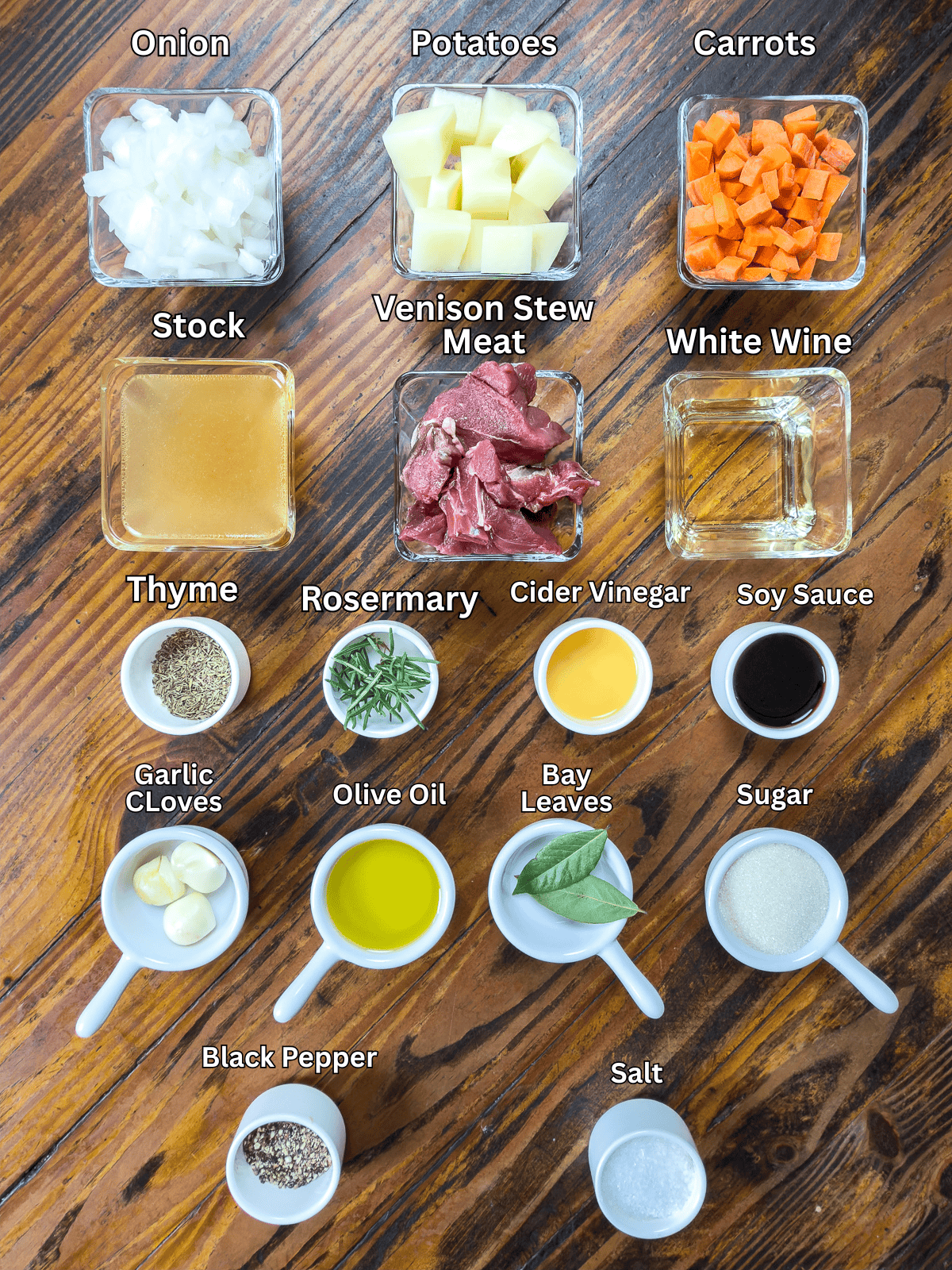
- Venison: Neck, shoulder, and shank are my first choices. These tougher cuts handle the long simmer well and contribute more body to the cooking liquid. If you need help with butchering, here’s my guide on how to debone deer neck and deer shanks. These cuts also work well in my venison barley soup.
- Venison stock/broth: I prefer homemade venison broth when I have it. Beef broth also works.
- White wine: A small amount gives the broth acidity and depth. It’s a much brighter flavor profile than using red wine.
- Soy sauce: This adds another layer of savory flavor and umami. Choose naturally brewed soy sauce for the best flavor.
- Apple cider vinegar: One teaspoon is enough to brighten the broth without making the stew taste vinegary. Look for raw apple cider vinegar. It’s not as harsh as the overly processed vinegars.
Substitutions and Additions
- Round steaks: Leaner venison round cuts can work. They can sometimes cook faster, but won’t give the broth quite as much body. They also lack connective tissue, so they can seem somewhat dry even when fork-tender.
- Beef broth: Use it in place of venison stock when needed.
- Sherry: Sherry can be substituted for the white wine.
- Ground venison: I don’t recommend substituting ground venison directly into this recipe. Make my ground venison stew instead.
- Adding Smoky flavor: For a smoky-tasting stew, add 1 to 2 strips of bacon during step two of the recipe. Or swap out the kosher salt with a smoked salt.
How To Make Venison Stew
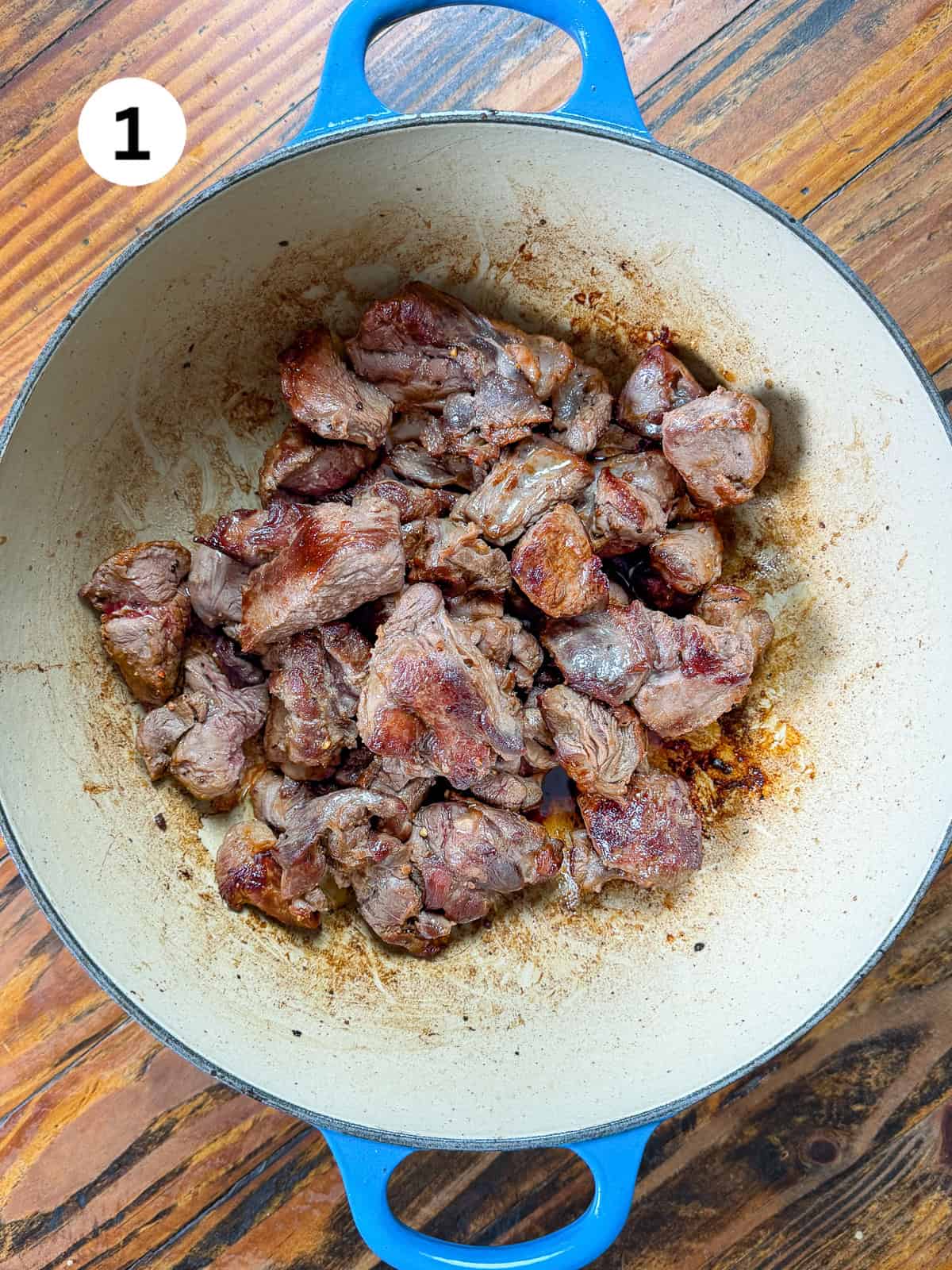
1. Brown the venison: Heat 2 tablespoons olive oil in a large pot over medium-high heat. Season the venison with salt and black pepper. Sear until nicely browned on all sides.
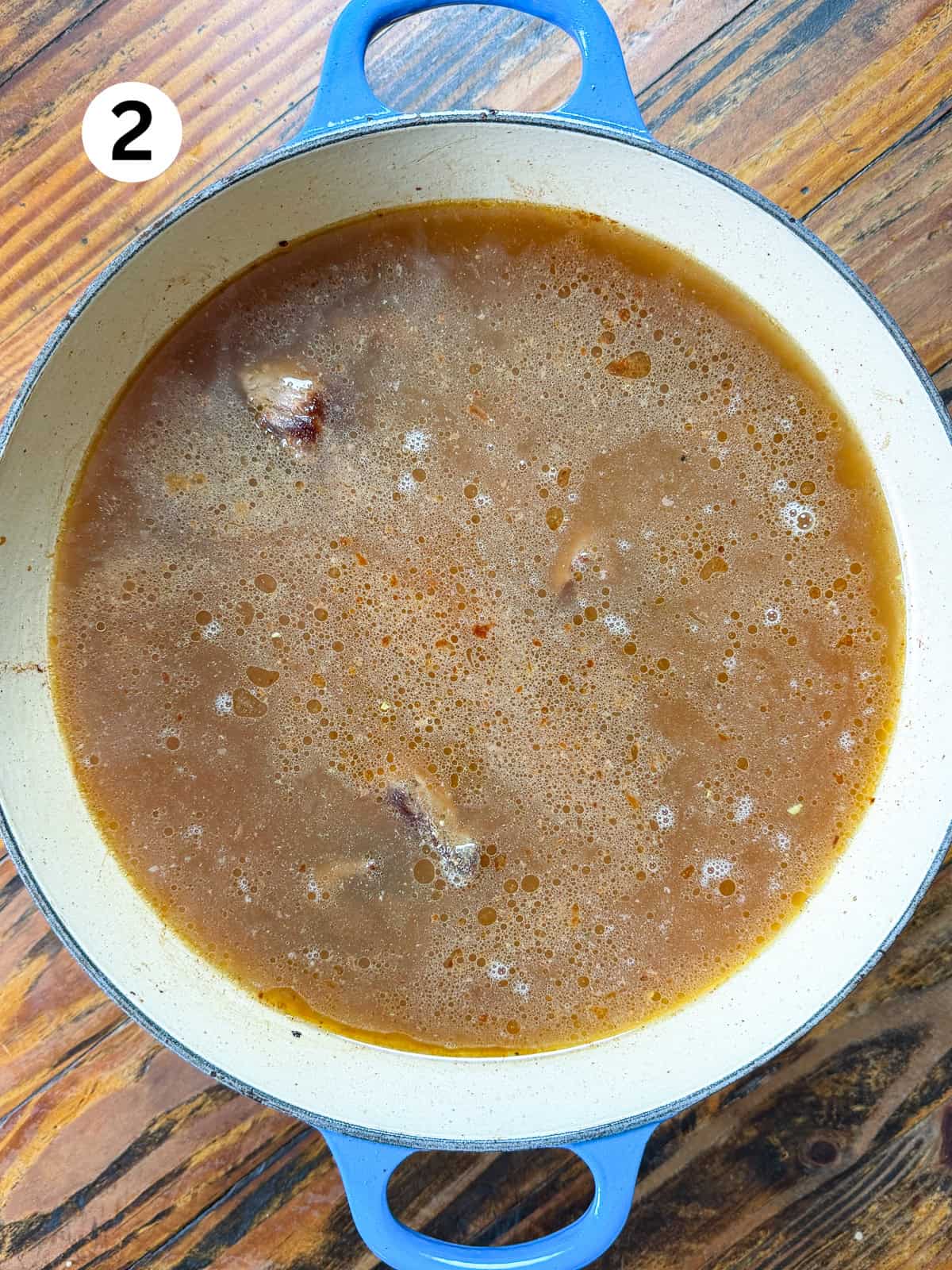
2. Cook the venison: Add enough venison stock or beef broth to just cover the meat (around 8 cups). Cover and gently simmer until fork-tender, about 3 to 4 hours. Check the liquid periodically and add more stock as necessary.
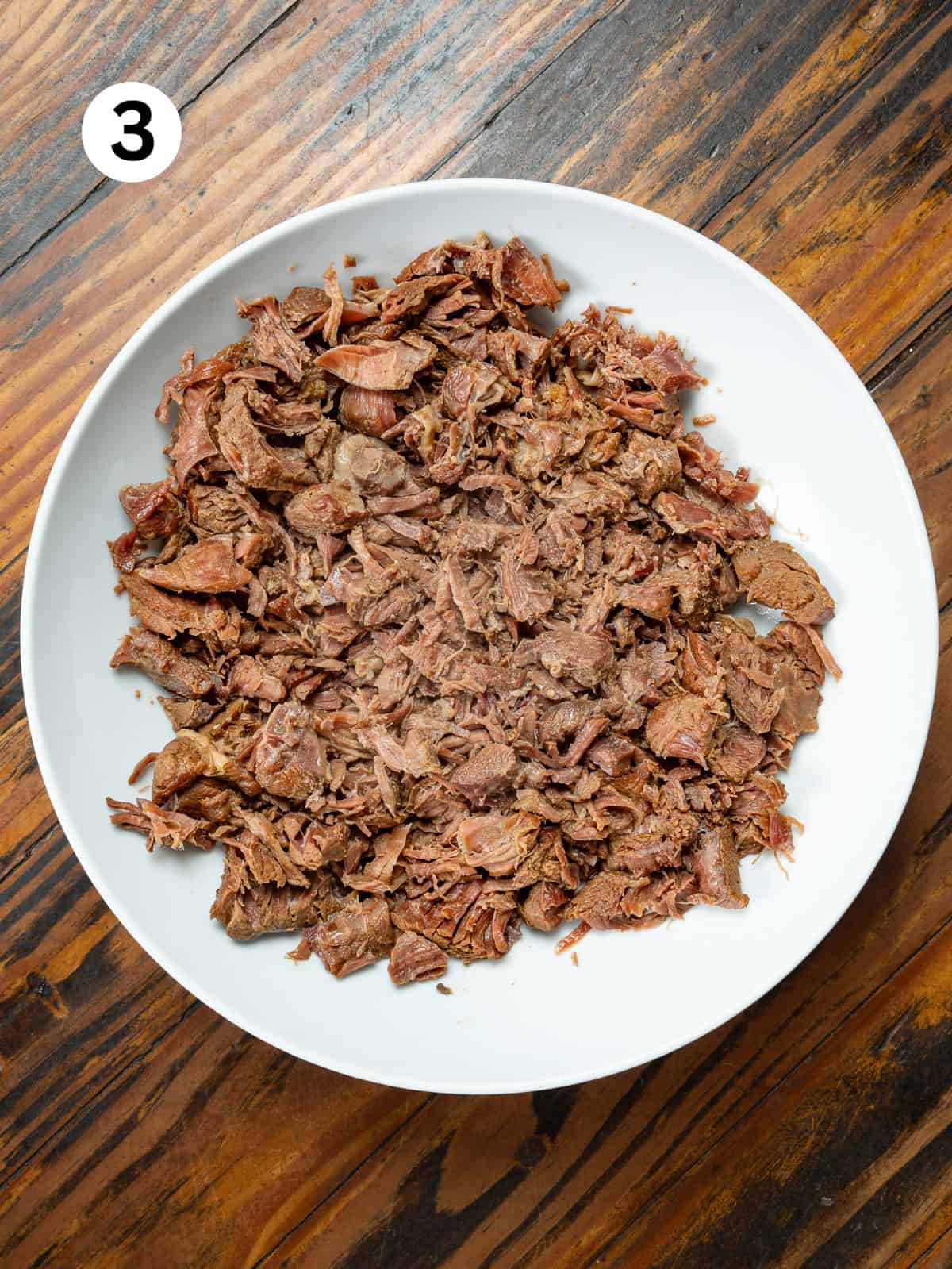
3. Shred the Venison and Reserve the Broth: Transfer the tender venison to a large bowl and shred. Reserve the cooking liquid and set aside.
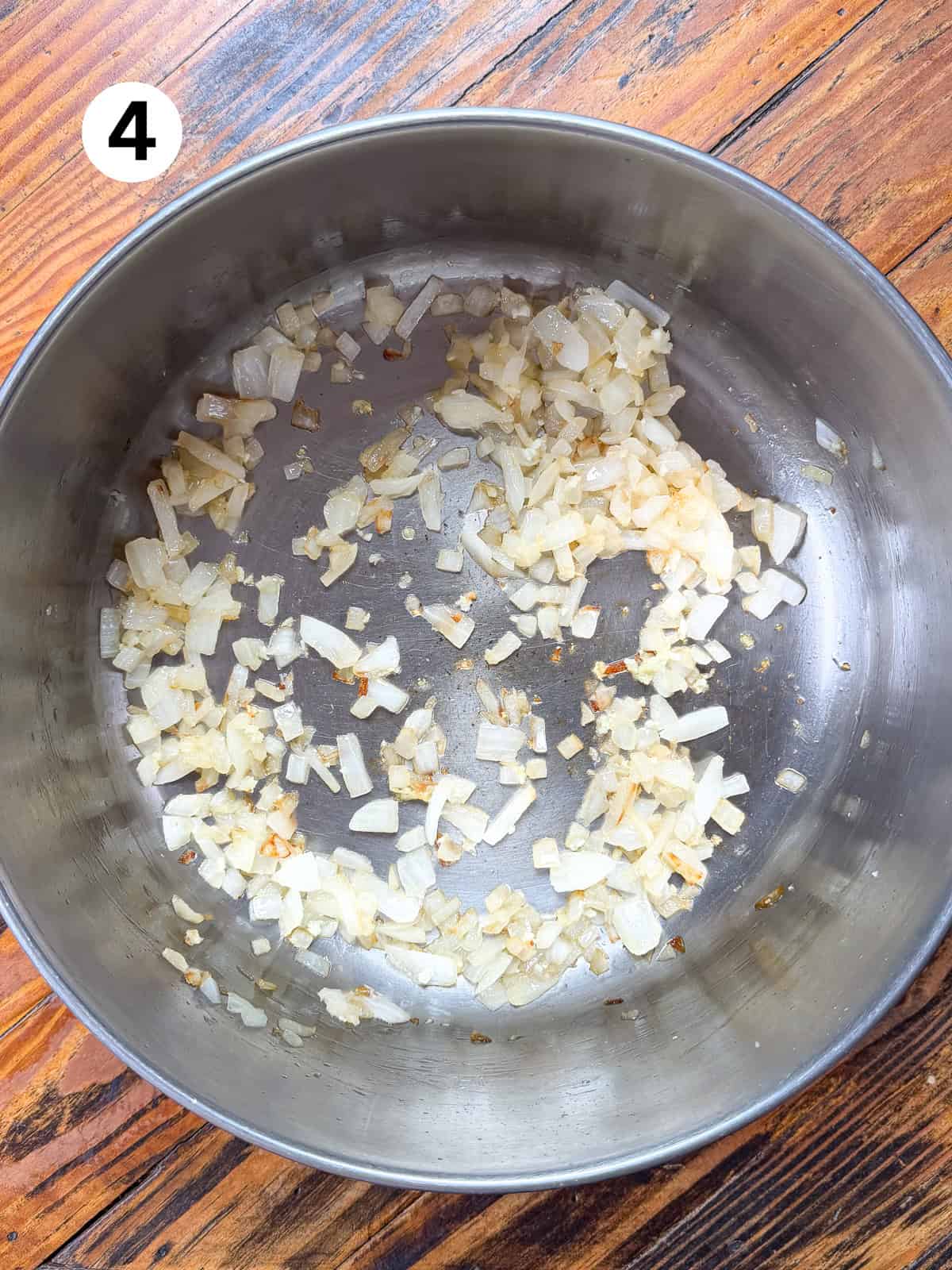
4. Cook the aromatics: Heat a clean pot over medium heat with the remaining tablespoon of olive oil. Cook the onion for 5 to 6 minutes, until translucent. Add the garlic and cook for 2 minutes.
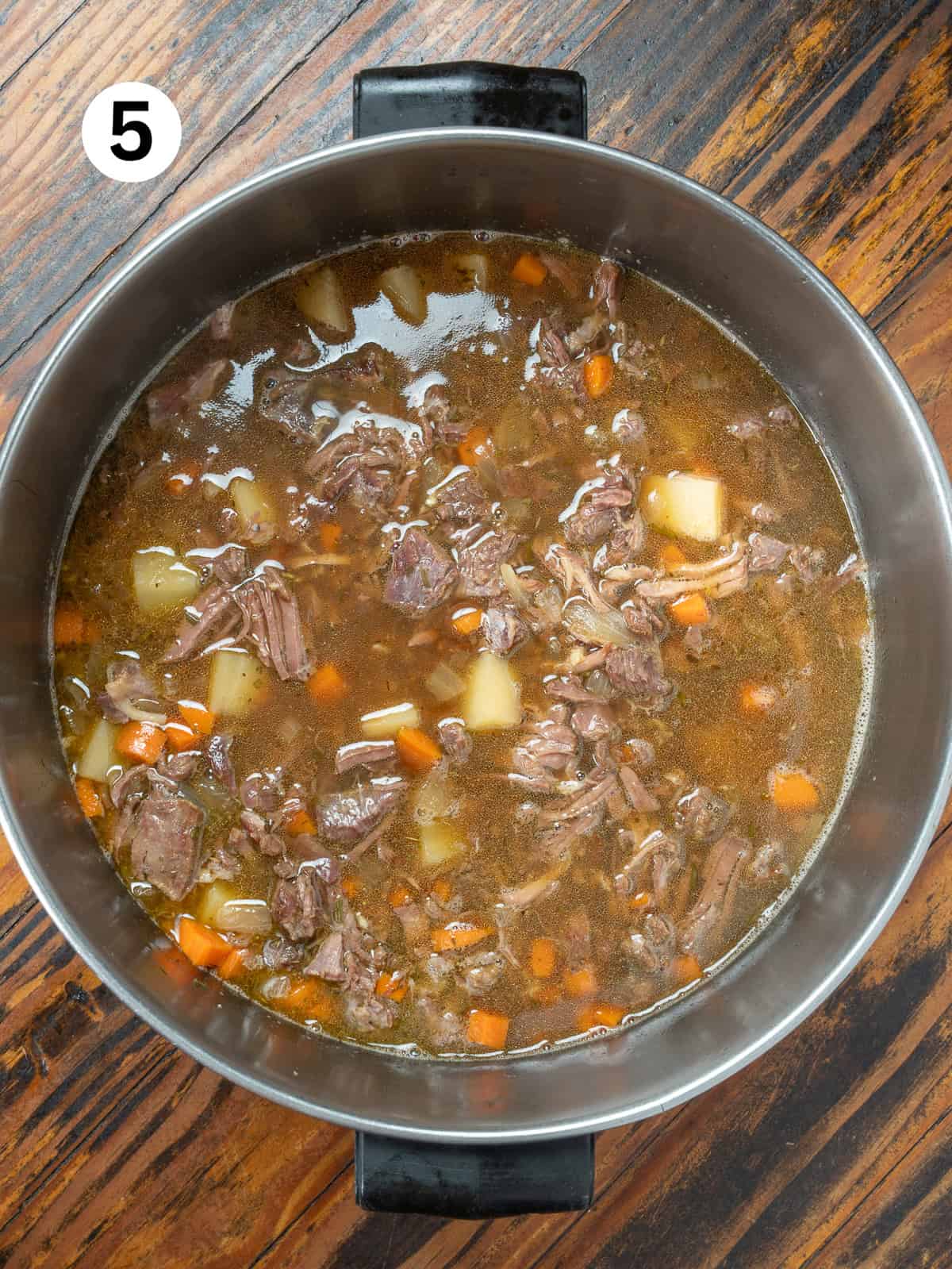
5. Cook the vegetables: Add the reserved cooking liquid (around 6 cups), soy sauce, white wine, cider vinegar, thyme, rosemary, bay leaves, carrots, and potatoes. Gently simmer for about 12 minutes, until the potatoes are just fork-tender.
Turn off the heat. Add the shredded venison and sugar and stir to combine. Let the stew rest for 10 minutes before eating to allow the venison to fully heat through. Season to taste with salt and pepper.
Chef Tips & Troubleshooting
- Don’t waste your time: There is a myth that you need to remove the connective tissue in deer meat for it to become tender. This is in fact the opposite of what you should be doing. That connective tissue breaks down and gives you the most tender bite possible.
- Meat still tough after three hours? Keep cooking. Tough wild game cuts have nuance in how long they take to tenderize. When the meat is ready, a fork should slide in easily and pull apart with little resistance.
- Broth getting low? Add enough additional stock to keep the venison covered during the long simmer.
- Potatoes softening quicker than expected? Pull the pot from the heat once they’re just fork tender. The venison is already cooked, so there’s no reason to keep cooking them.
- Want to work ahead? Cook the venison up to 2 days ahead and refrigerate it in its cooking liquid. Cook the vegetables in the reserved broth when you’re ready to serve.
- Storing leftovers: Refrigerate the finished stew for 3 to 4 days. It will get better after a day of resting in the fridge. Freeze for up to 2 months. Reheat gently over low heat, adding a splash of stock or water if the broth needs loosening. This makes for an easy addition to your deer camp meals.
Venison Stew FAQs
How do I know if I have venison Stew meat, and what should I do if I don’t?
True venison stew meat will have a fair amount of connective tissue. You should be able to visually see off-white striations within the meat. These are made of up silverskin and or ligaments.
If you do not see this within the meat and it appears deep red throughout, chances are, you have meat from the top round, bottom round, and eye of round. You can see detailed pictures of these cuts in my venison round steaks guide.
If you do indeed have round cuts, fear not. You can still make this recipe. My recommendation is to rest the stew in the refrigerator overnight after it has been cooked. This will allow the meat to fully hydrate and take on the flavors of the broth. I do this to make up for the lack of juciness that you get from true stew meat.
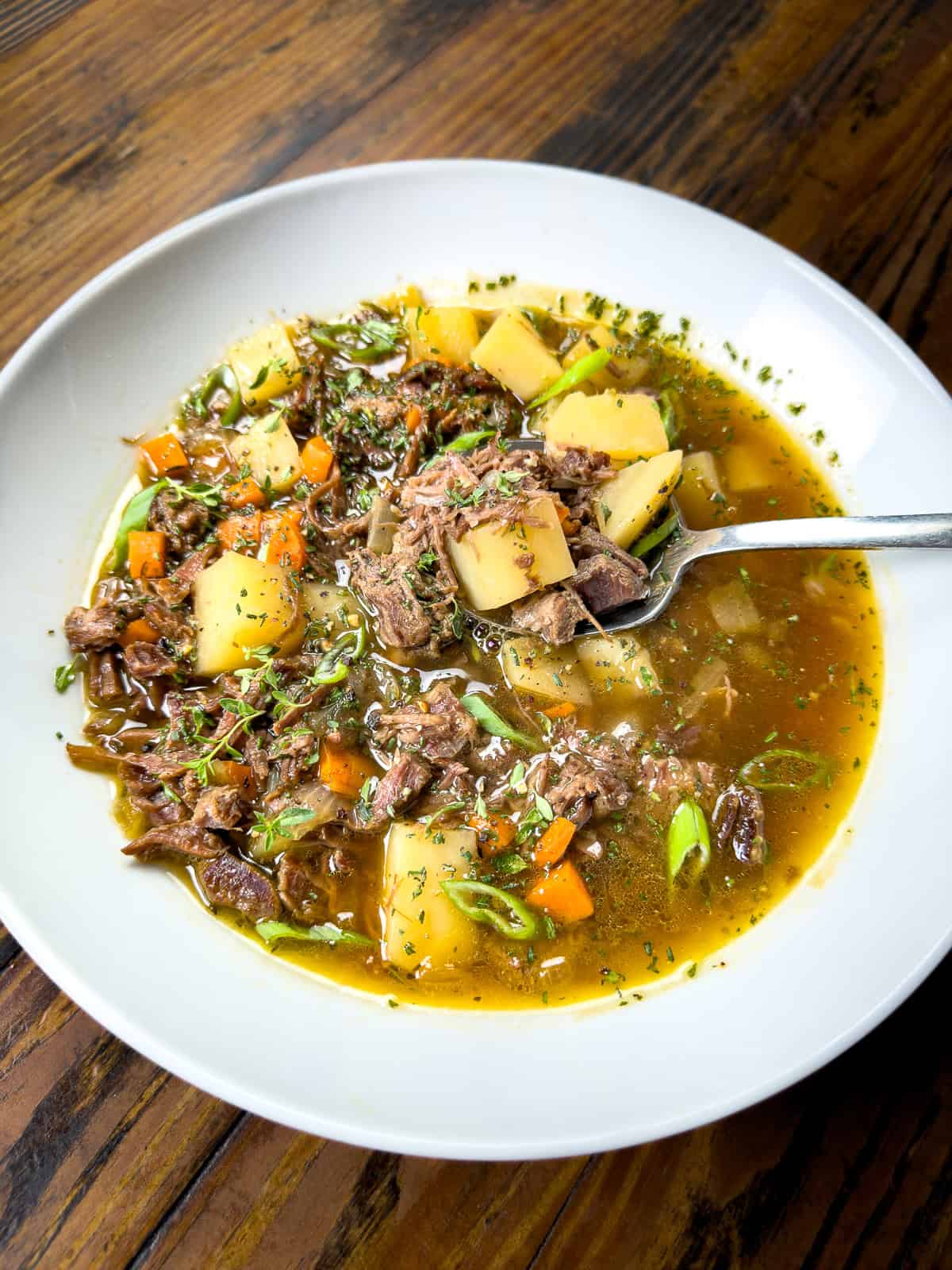
How I Serve Venison Stew
I like to serve this stew simply with my family’s favorite breads, warm Southern johnny cakes, Parker House dinner rolls, or Yorkshire pudding bread. We like to cover the leftovers with a pie crust to make an easy venison pot pie.
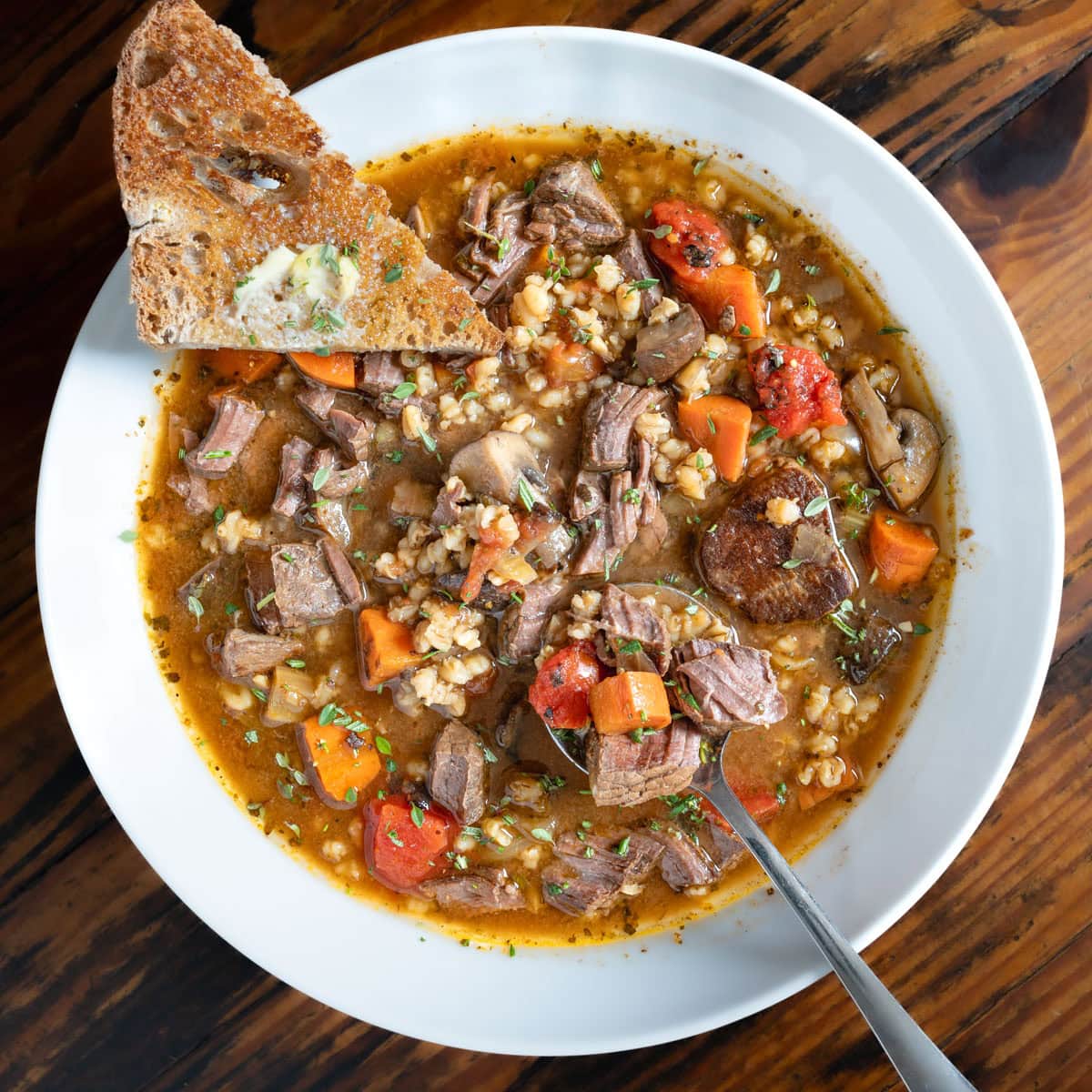
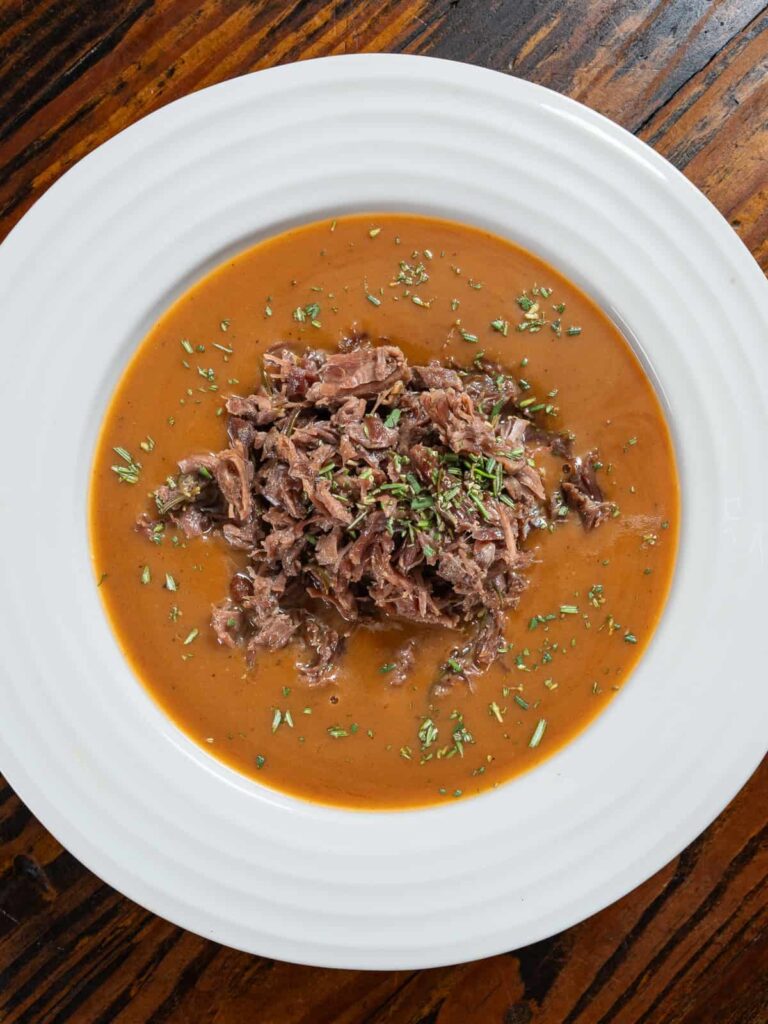
More Venison Stew Recipes
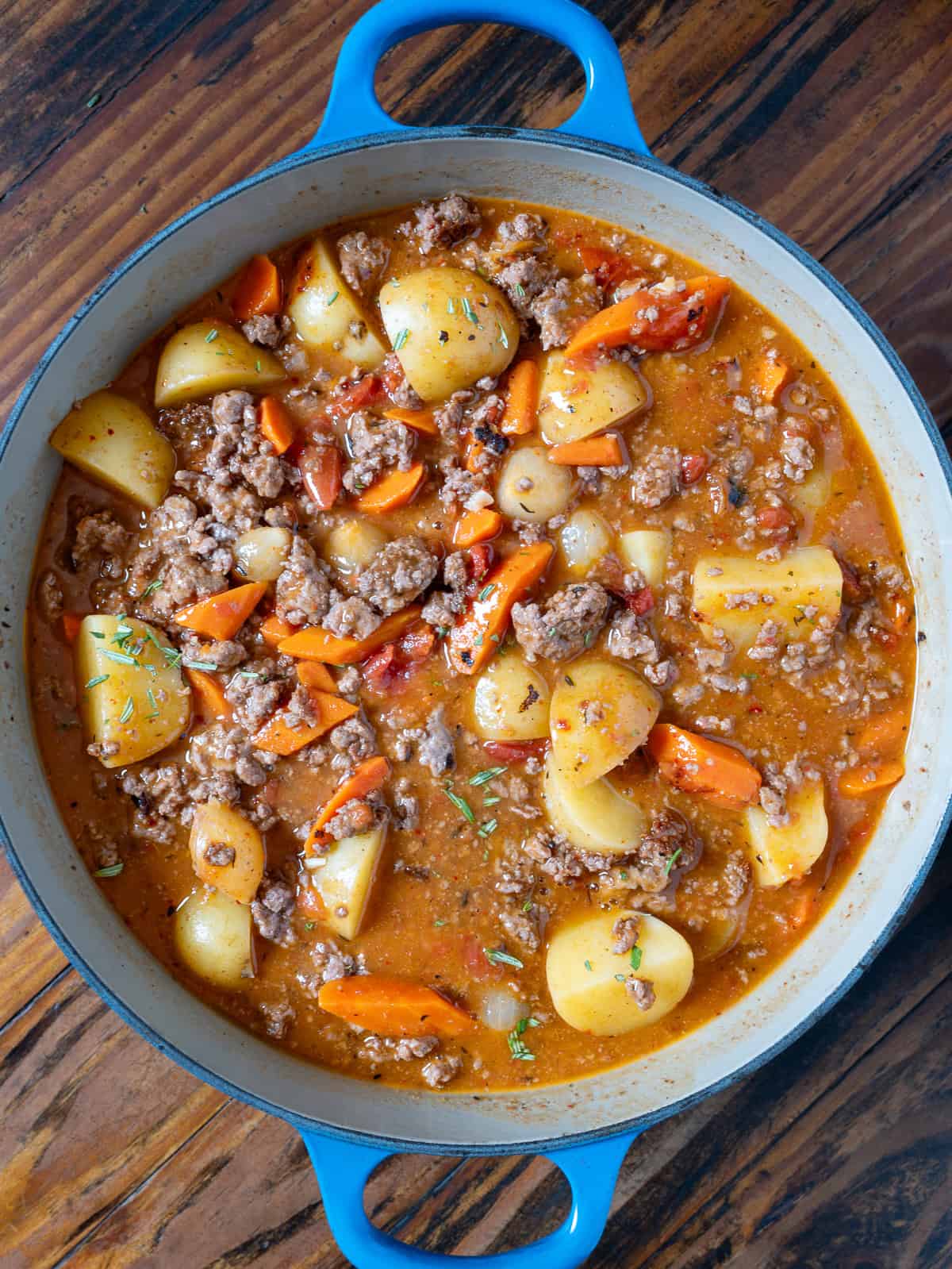
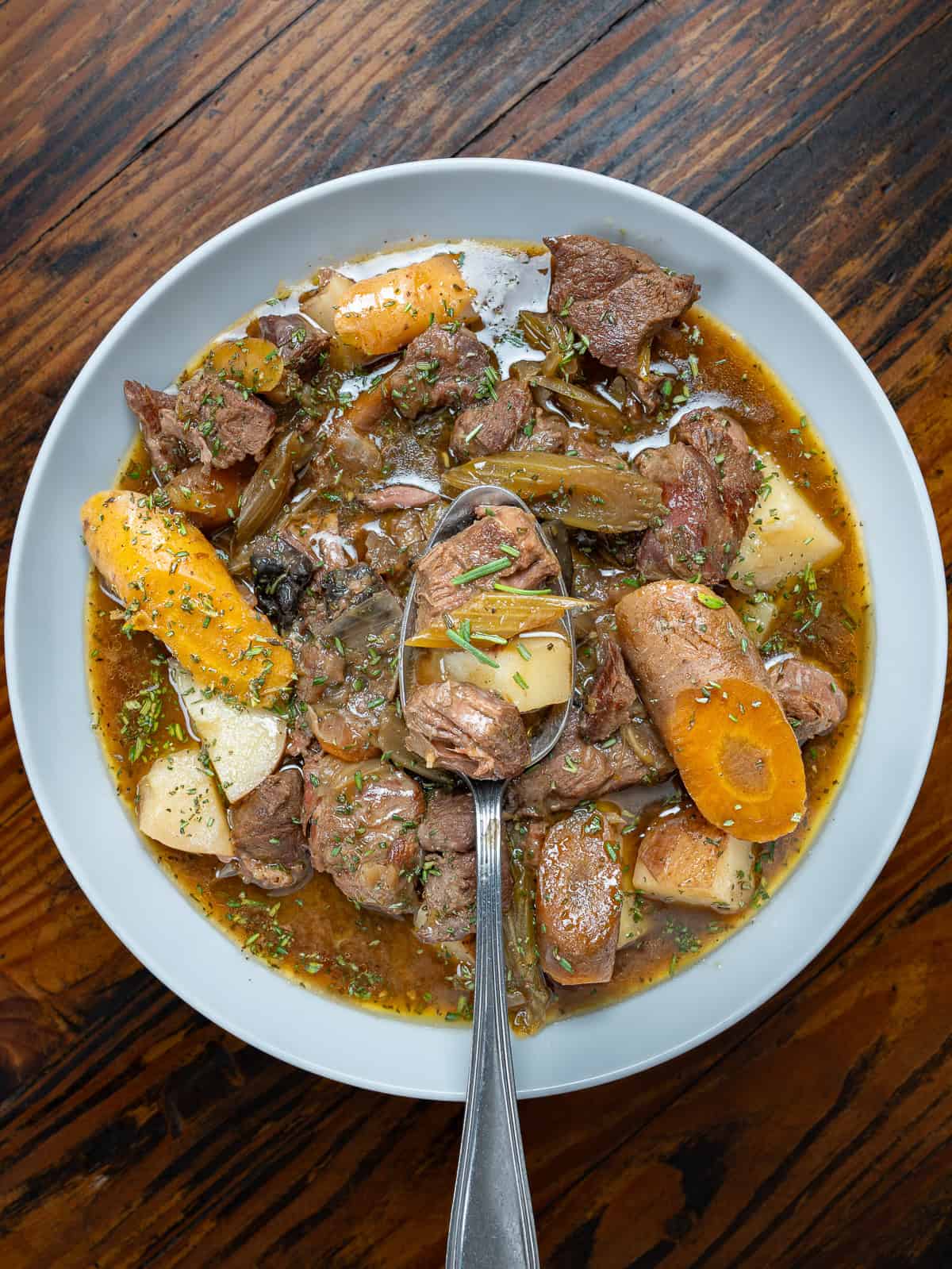
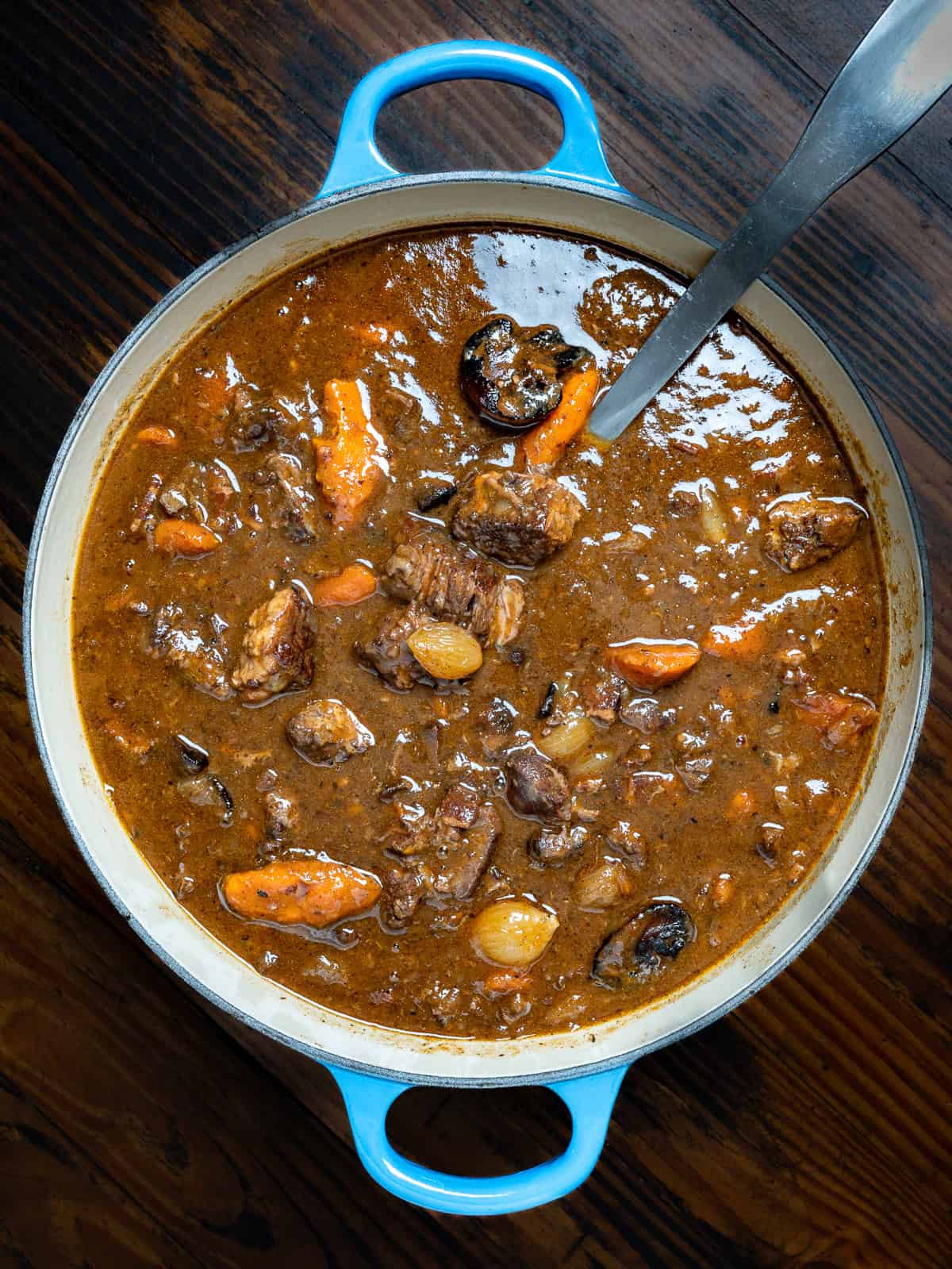
Tried this Recipe? Please leave a ⭐⭐⭐⭐⭐ rating in the recipe card below and leave a comment. I love to hear from readers! And if you have any cooking questions or want to share your latest food photos, give me a shout on Instagram at @larry__white.
Venison Stew with Wine
Ingredients
- 2 pounds boneless venison (cut into 2-inch pieces)
- 8 cups Venison stock or beef broth (or as needed to cover the meat)
- 3 tablespoons olive oil
- 3 cloves garlic, minced
- 1 cup sweet onion, small dice
- 1 1/2 cups carrots, small dice
- 2 cups potatoes, peeled and cut into 1-inch pieces
- 1 teaspoon apple cider vinegar
- 1/4 cup white wine
- 2 bay leaves
- 1 teaspoon dried thyme
- 1 tablespoon fresh rosemary, chopped
- 2 teaspoons sugar
- 2 tablespoons soy sauce (naturally brewed)
- Salt and black pepper, to taste
- 1/4 cup sliced green onions (optional for garnish)
Instructions
- Brown the venison: Heat 2 tablespoons olive oil in a large pot over medium-high heat. Season the venison with salt and black pepper. Sear until nicely browned on all sides.
- Cook the venison: Add the venison stock or beef broth to cover the meat. Cover and gently simmer until fork-tender, about 3 to 4 hours. Check the liquid periodically and add more stock as necessary.
- Reserve the broth and shred the meat: Remove the venison and place it in a bowl. Reserve the cooking liquid. Shred the meat and set it aside.
- Cook the aromatics: Heat a clean pot over medium heat with the remaining tablespoon of olive oil. Cook the onion for 5 to 6 minutes, until translucent. Add the garlic and cook for 2 minutes.
- Cook the vegetables: Add the reserved cooking liquid, soy sauce, white wine, cider vinegar, thyme, rosemary, bay leaves, carrots, and potatoes. Gently simmer for about 12 minutes, until the potatoes are just fork-tender. Turn off the heat.
- Finish the stew: Add the shredded venison and sugar. Stir to combine. Let rest for 10 minutes to ensure the venison is heated through.
- Season: Taste and adjust with salt and black pepper. Garnish with sliced green onions if desired. To freshen the stew, add freshly chopped rosemary and thyme.
NOTES
- Venison: The best cuts of deer to use for stew are meat from the shanks, neck, shoulders, and sirloin tip. If you are working with venison that has little to no connective tissue, I recommend cooking the stew the day before you intend to eat it. This will maximize the flavor and juiciness of the meat. You can use the meat from deer, elk, antelope, or moose. If you’re in a pinch, beef stew meat or lamb shoulder will also work.
- Wine: Sherry can be substituted for the white wine.
- Stock: It’s a good idea to have extra stock on hand in case you want the stew a little thinner. My stew usually has around 6 cups of stock in it at the end of cooking. For a lighter-tasting stew, you can use half chicken stock and half beef stock.
- Optional Thickening: Whisk 1 tablespoon cornstarch with 1 tablespoon cold water, stir it into the simmering stew, and cook for 1 to 2 minutes until the broth lightly thickens. If you overthicken the stew, thin it out with a little water or stock.
Nutrition
Nutrition information is automatically calculated, so should only be used as an approximation. Nutrition is per serving.




2 thoughts on “Venison Stew with White Wine”
Best stew ive eaten in a bit man.
Good stuff ol boy