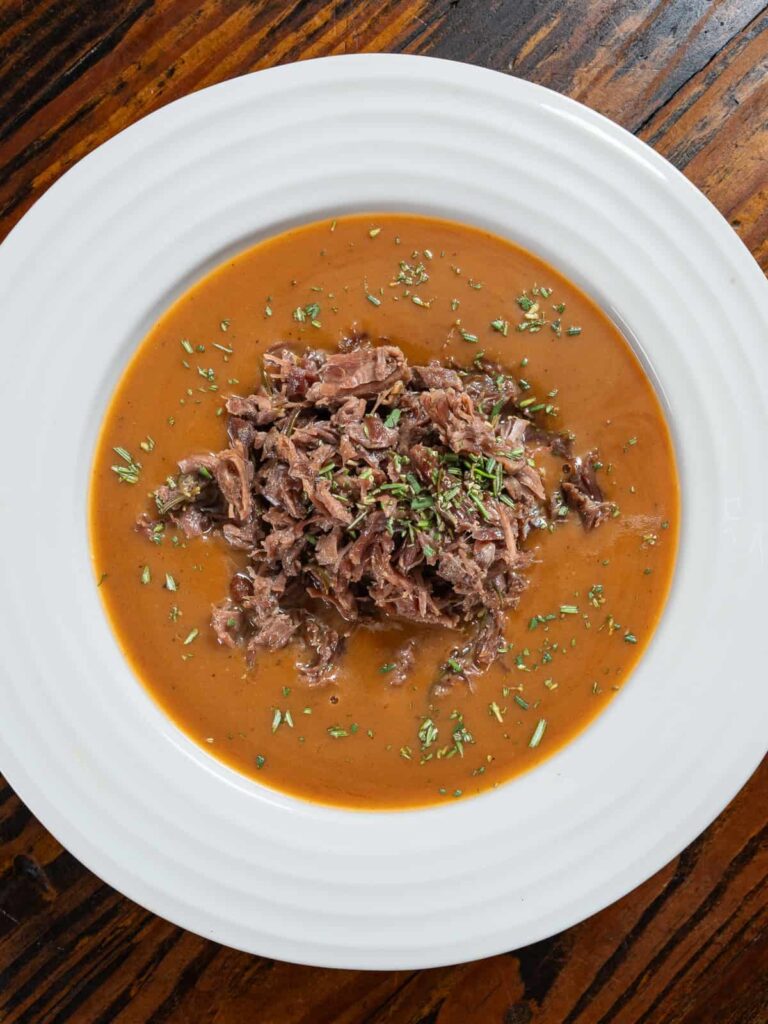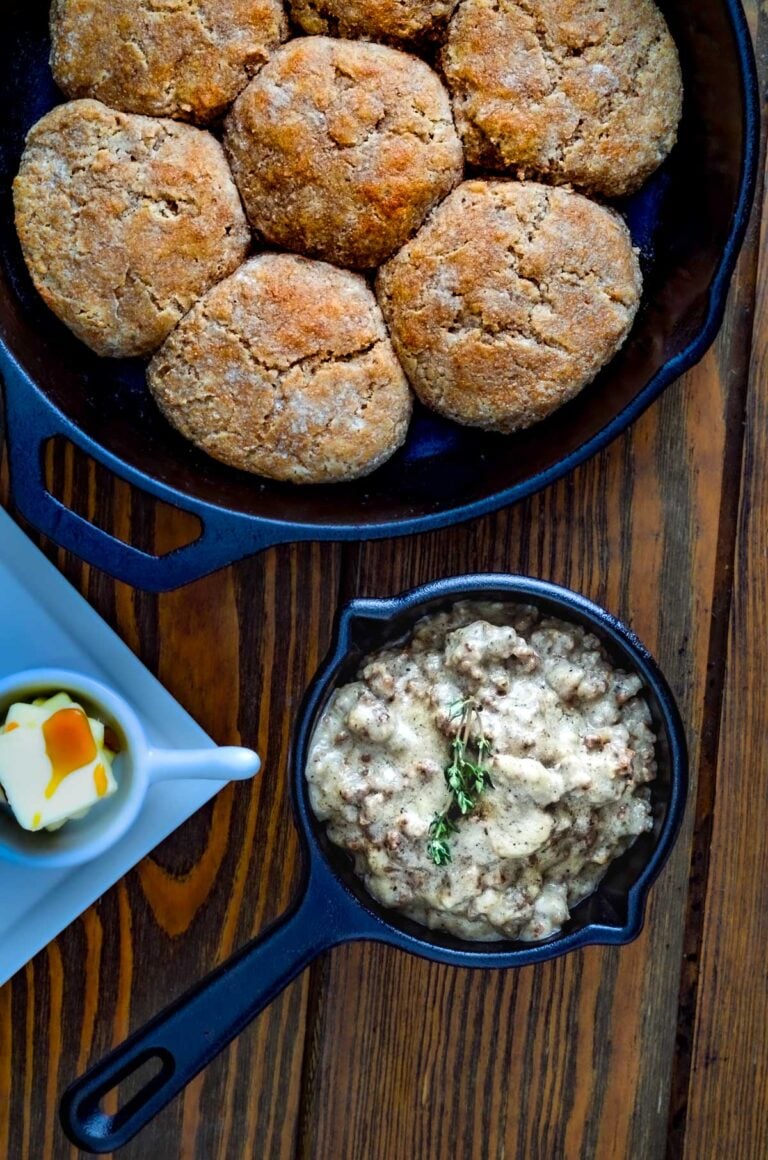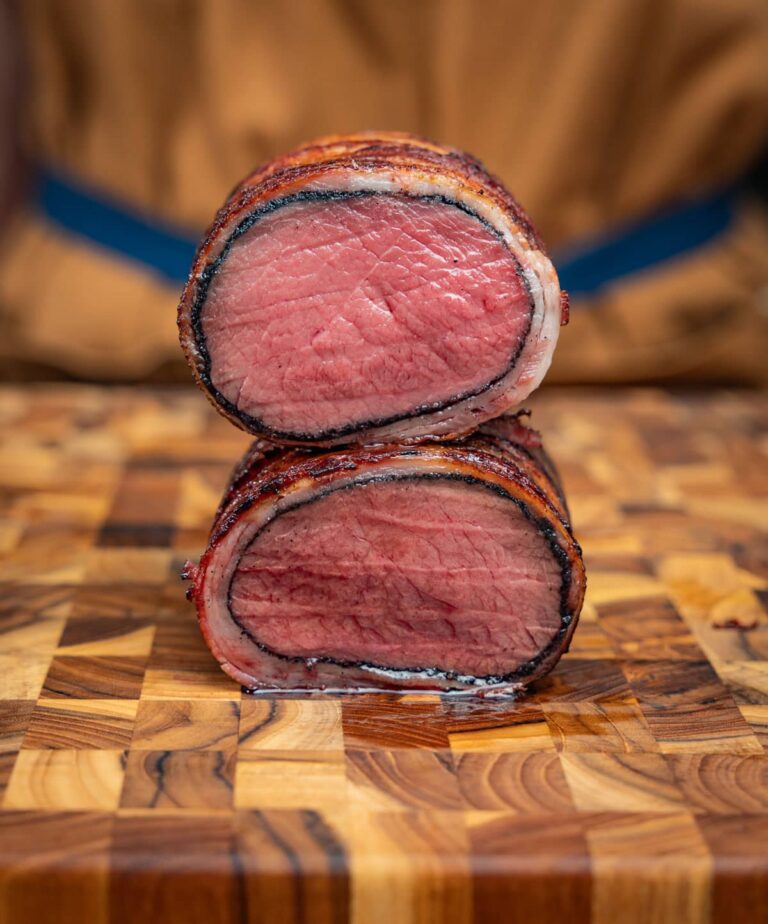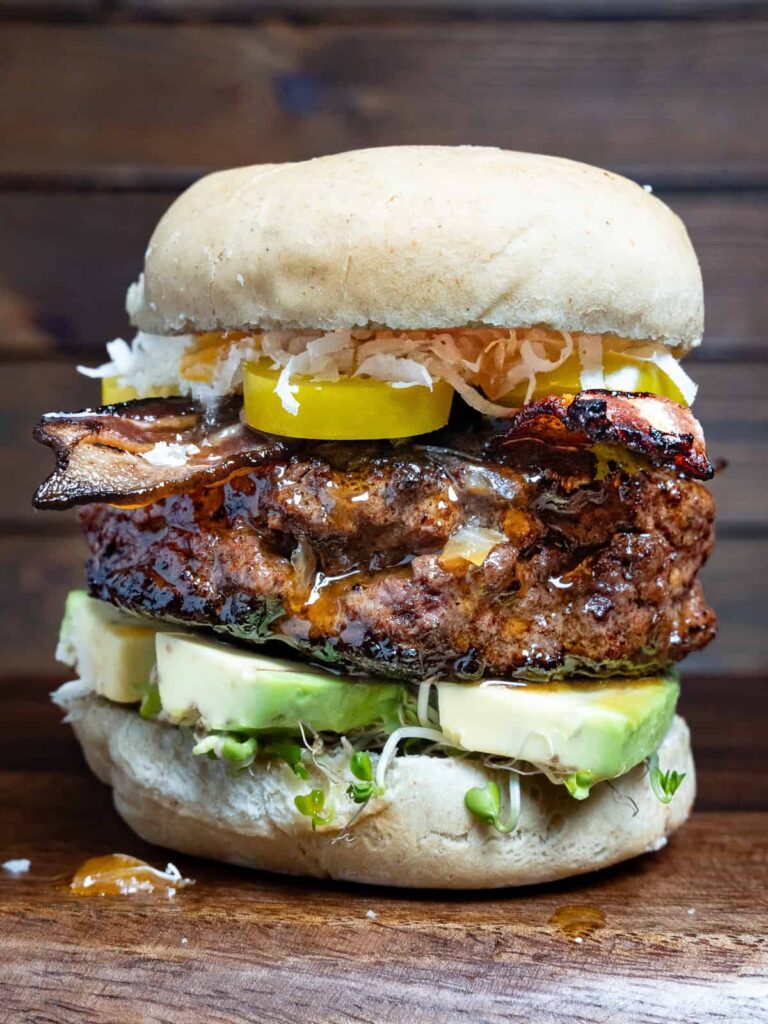
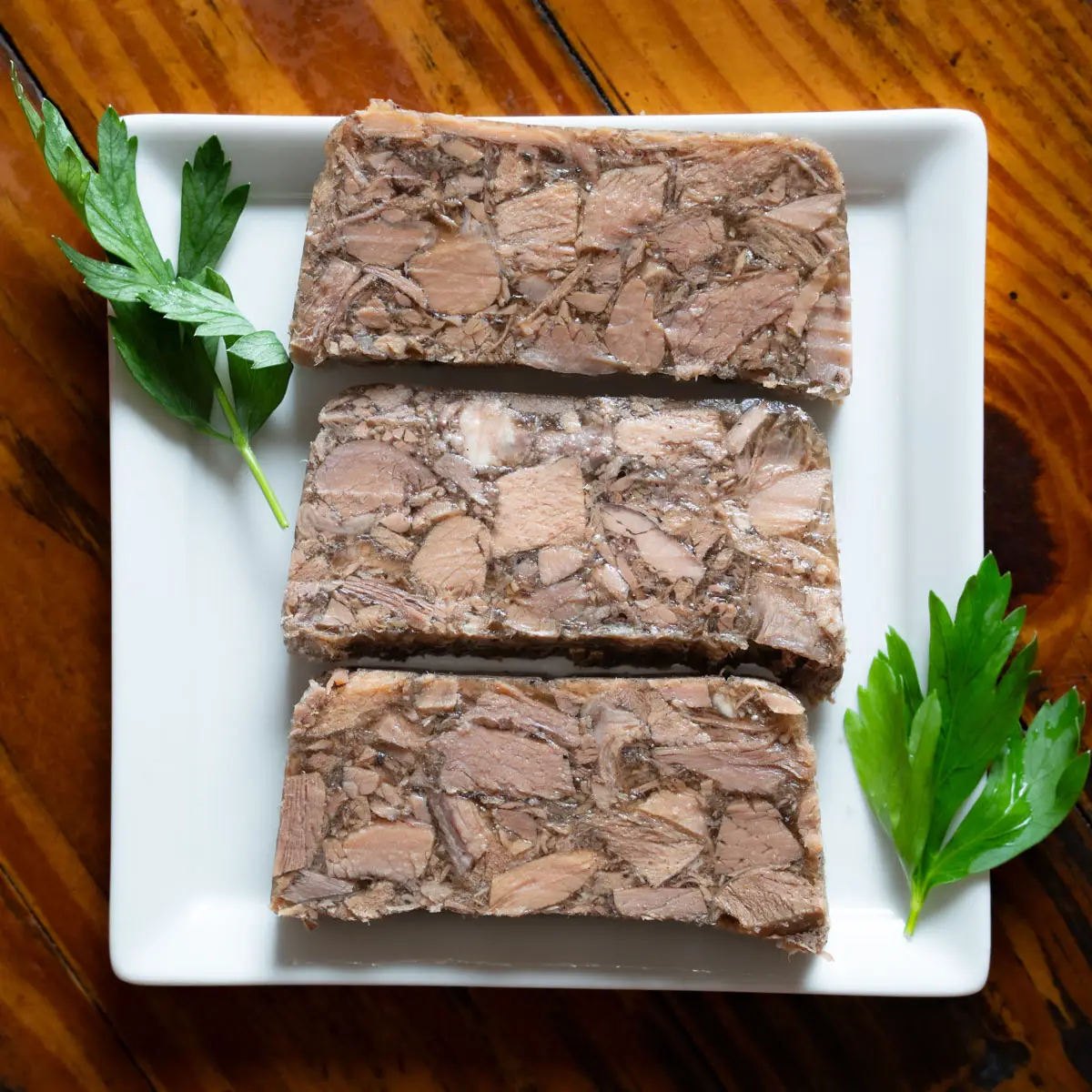
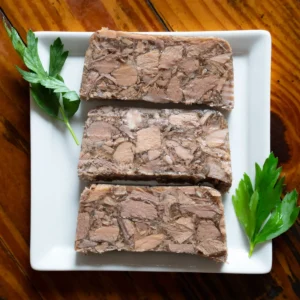
Hog head cheese is tender, cooked pork set in a savory, gelatin-rich broth, then chilled until firm enough to slice. This hog head cheese recipe gives you that old-school texture without using a whole pig head.
Instead of the head, this version uses pork shoulder for the meat and pig feet or trotters for the natural gelatin. My method is simple: Simmer the pork until tender, reduce the cooking liquid, test the gel, pack the meat into a mold, and chill it overnight.
Quick Look: Hog Head Cheese
- Ready in: 30 minutes prep, 3-4 hours cook time, plus overnight chilling
- Serves: 8
- Calories: 457
- Best cut/protein: Pork shoulder, pig feet, or trotters
- Cook method: Stovetop simmer, with a slow cooker option
- Why this version works: It uses other parts of the pig to get a sliceable head cheese texture without processing the head.
- Top tip to know: The reduced cooking liquid needs to pass the gel test before you mold the meat
SUMMARIZE & SAVE THIS CONTENT ON
I make hog head cheese every year from wild hogs that I harvest. But I usually skip the traditional whole-head method because shot placement can make the head impractical to use. Shoulder meat and pig feet give me the same kind of sliceable, gelatin-set loaf.
So if you can’t or don’t want to use a pig’s head, this method is for you. It’s honestly not that much more difficult to make than a country terrine.
Why This Recipe Is Great
No whole hog head to deal with: You still get the flavor and texture of head cheese without needing a giant stockpot, extra counter space, or the mess that comes from processing a whole head.
Practical for wild hogs: This version works when the head is not usable or not worth processing, but you still want a traditional-style cold pork terrine.
Made with natural collagen: Pork shoulder brings the meat, while pig feet or trotters give the cooking liquid the body it needs to set.
The gel test keeps it reliable: A chilled spoonful of reduced liquid tells you whether the finished loaf will slice cleanly before you pack the mold.
Cleaner than a whole-head batch: No brining a head, torching hair, or searching for a giant pot. The method is still old-school, just more practical.
Easy to find ingredients: It’s not as easy to find a hogs head today as it was when I was a kid in the 80’s. But you can find pork shoulder and pig’s feet at most grocery stores, butchers’ shops, or Asian markets.
Key Ingredients
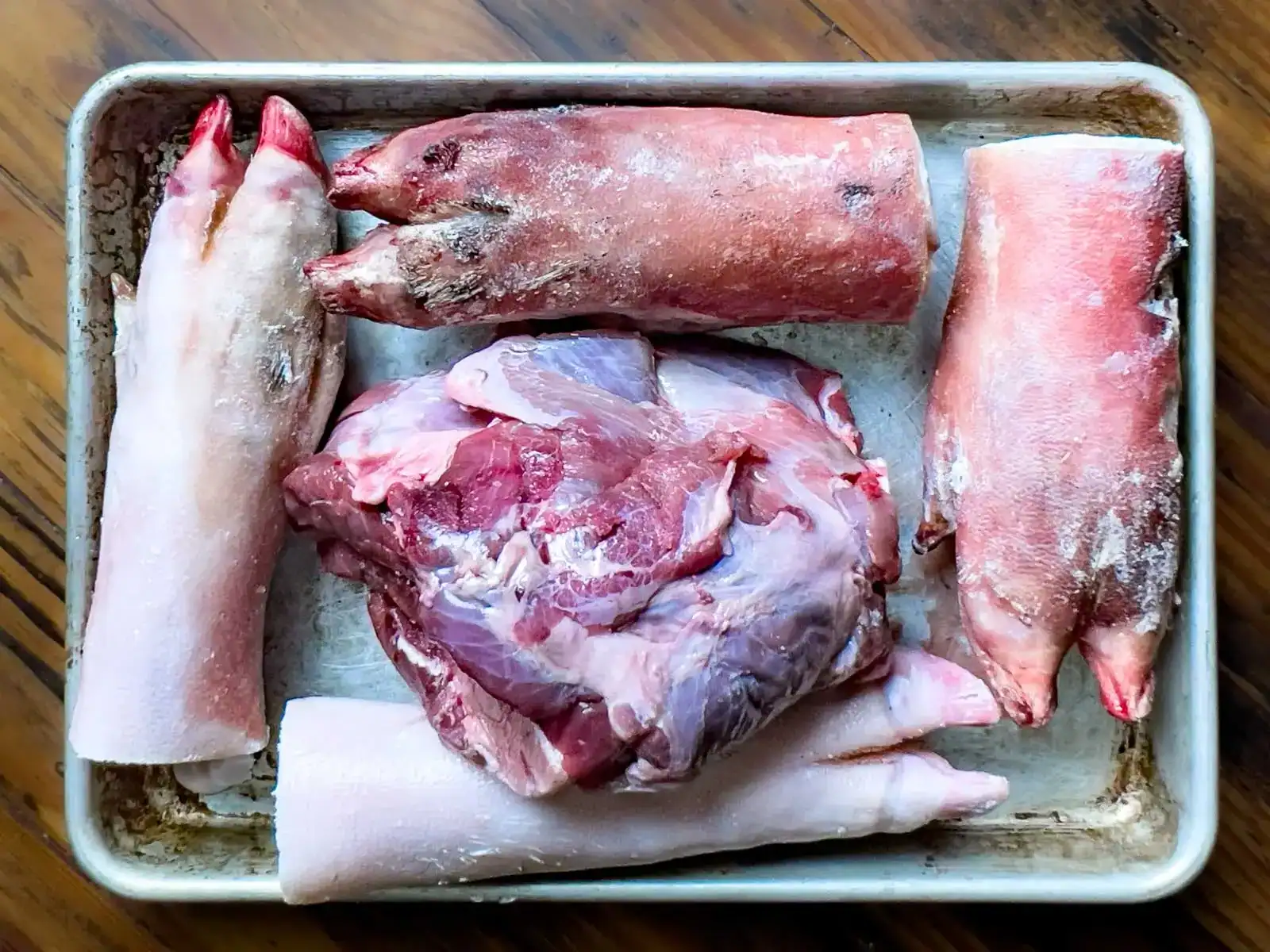
Pork shoulder: This is the main meat in the recipe. It cooks until tender, then gets diced, chopped, or shredded before molding. Dice it small for cleaner slices or shred it for a more rustic head cheese.
Pig feet or trotters: These are what make the recipe work. Pork shoulder gives you meat, but the feet bring the collagen that turns the reduced cooking liquid into natural gelatin.
Garlic, onion, carrots, celery, bay leaves, and herbs: These add flavor to the cooking liquid as the pork simmers. They get strained out before the head cheese is molded.
Black peppercorns and red pepper flakes: Black pepper gives the broth a steady base. Red pepper flakes are optional, but they add a little heat without making the head cheese overly spicy.
Red wine vinegar: Vinegar cuts through the richness and keeps the finished head cheese from tasting flat.
Kosher salt: Salt goes in after the liquid reduces. If you salt heavily at the beginning, the broth can become too salty as it concentrates.
Reduced cooking liquid: This is the binder or “glue” that holds everything together. After simmering and straining, reduce the cooking liquid until you have about 2-3 cups.
Unflavored gelatin (optional): Use only if the reduced liquid fails the gel test. A little can help a weak set, but too much will make the texture stiff and rubbery.
How To Make Hog Head Cheese
- Cook the pork: Place the pig feet, pork shoulder, garlic, black peppercorns, red pepper flakes, bay leaves, onion, herbs, vinegar, carrots, and celery in a large pot. Cover everything with cold water. Bring it to a boil, then immediately reduce the heat to a gentle simmer. Skim off any foam that rises to the top.
- Simmer until tender: Cook uncovered for 3-4 hours. The pork shoulder should be fork-tender, and the meat around the pig’s feet should be soft and pulling away from the bone. Keep the heat low. A hard boil can make the broth cloudy and beat up the meat.
- Remove the meat: Use tongs or a slotted spoon to move the pork shoulder and pig feet to a large bowl. Let everything cool until you can handle it safely.
- Strain the cooking liquid: Strain it through a fine-mesh strainer or cheesecloth into a clean pot. Discard the vegetables, herbs, peppercorns, and bay leaves.
- Reduce the liquid: Bring the strained liquid to a simmer and reduce it by about half. Skim off visible fat from the surface as needed. You want about 2-3 cups of rich cooking liquid for molding.
- Do the gel test: Spoon a few tablespoons of the reduced liquid onto a small plate and chill it in the refrigerator. It should set lightly firm, hold its shape, and not slide around the plate. When pressed with your finger, it should spring back a little.
- Fix the liquid if needed with gelatin: If the liquid does not set, reduce it a little more and test again. If it still needs help, dissolve a small amount of unflavored gelatin into the warm liquid and repeat the test before molding.
- Season the liquid: Taste the reduced liquid after it passes the gel test. Add kosher salt as needed. This is your last chance to adjust the seasoning before the head cheese sets.
- Pick and cut the meat: Remove the meat from the pig feet and discard the bones, tough cartilage, and anything you do not want in the finished loaf. Cut the pork shoulder into small pieces for cleaner slices, or chop and shred it for a more rustic texture.
- Pack the mold: Line a loaf pan or terrine mold with plastic wrap, leaving enough overhang to cover the top. Add the pork mixture, then pour in just enough reduced cooking liquid to barely cover the meat.
- Press and chill: Fold the plastic wrap over the top and press gently so the meat settles into the liquid. Refrigerate overnight until fully set.
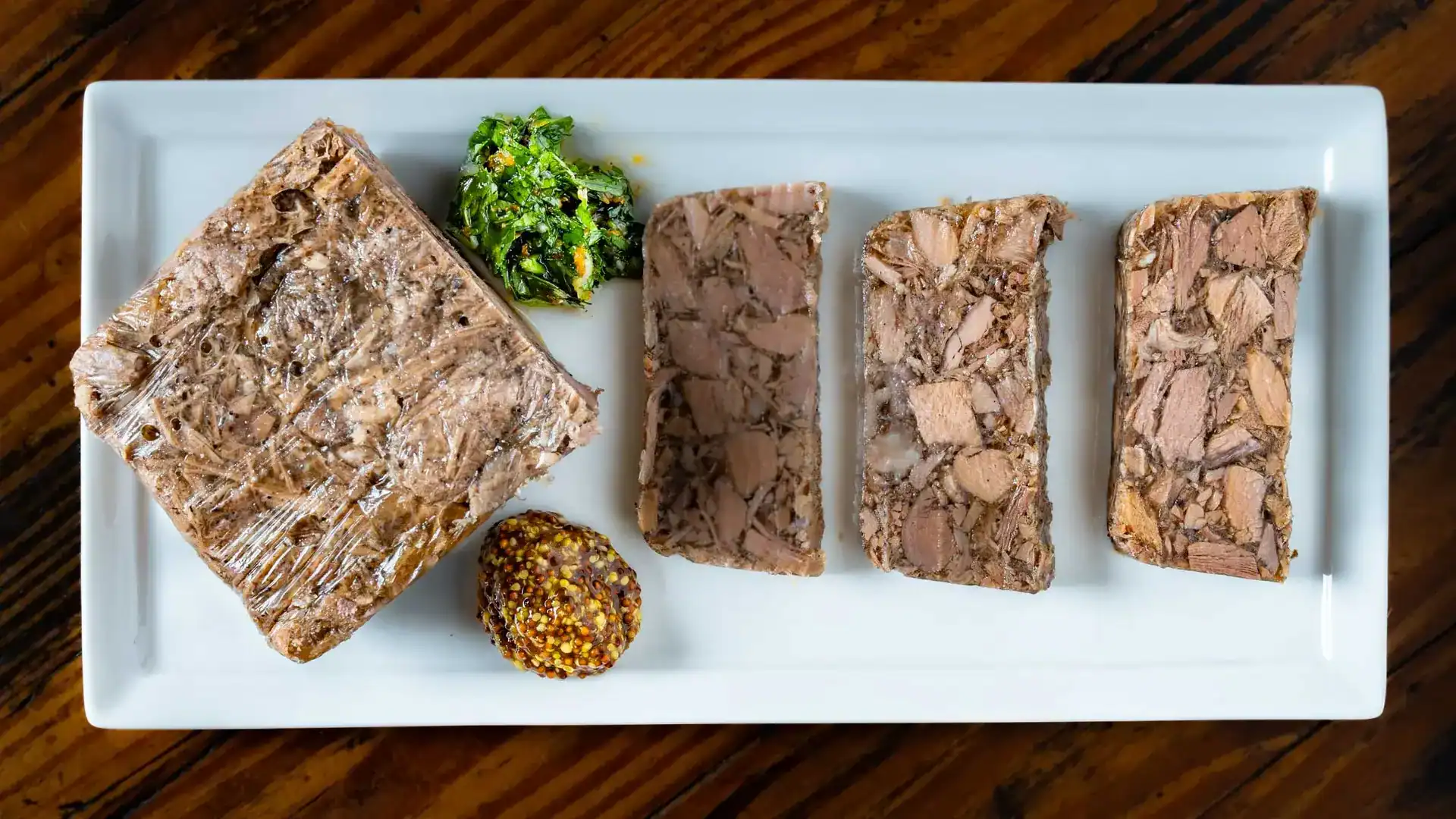
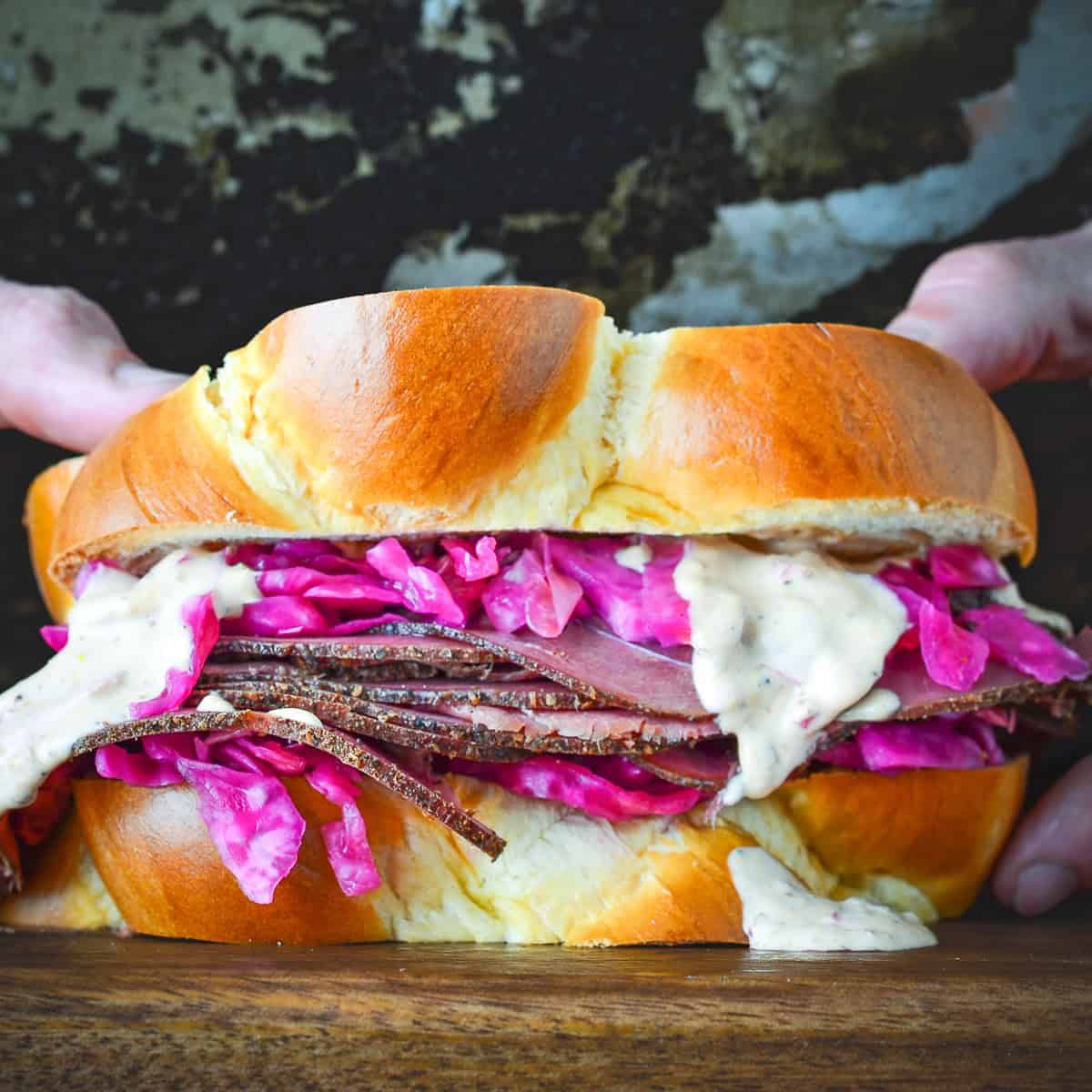
- Slice and serve: Unwrap the hog head cheese and invert it onto a plate or cutting board. Slice with a sharp knife and serve chilled with crackers, crusty bread, mustard, pickled quail eggs, or a sharp vinaigrette-style salad. You can also eat on a sandwich as you would with deli meat.
Chef Tips
Use the feet or trotters: While pork shoulder provides the meat, it doesn’t contain enough natural gelatin on its own. The feet are what contain the extra gelatin needed to help the loaf set.
Simmer gently: Once the pot comes to a boil, lower the heat. Boiling clouds the cooking liquid and can break the meat apart in the pot.
Reduce before you season: Salt gets stronger as the liquid concentrates. Season after reducing so the finished head cheese does not turn salty.
Know what the gel should look like: The chilled spoonful should hold its shape, feel lightly firm, and spring back when pressed. If it runs across the plate, it is not ready.
Keep gelatin on hand: It can save a weak set if the reduced liquid does not pass the gel test. Add a little at a time. Too much gelatin makes the loaf stiff and rubbery.
Pack with just enough liquid: The meat should be barely covered. Too much liquid makes the terrine loose and overly gelatinous.
Chill it overnight: Do not rush the set. Overnight chilling gives you cleaner slices and a better texture.
Use the slow cooker if needed: Cook the pork, feet, seasonings, vinegar, and aromatics on low for 6-8 hours, then strain and reduce the liquid on the stovetop before testing the gel.
Hog Headcheese FAQs
Why is it called hog head cheese?
It is called hog head cheese because traditional versions were made from the head of the hog. The “cheese” part does not mean dairy. It refers to the pressed, sliceable shape of the finished loaf. Head cheese is the most common name. In some regions, it may also be called brawn or souse, though souse usually has a sharper vinegar flavor.
How long will head cheese last in the fridge?
Keep homemade head cheese tightly wrapped and refrigerated. Use it within 3-4 days. For longer storage, wrap it tightly, vacuum-seal if possible, and freeze it for up to 2 months for the best texture.
More Related Recipes
Below are some more of my favorite charcuterie recipes and pairings.


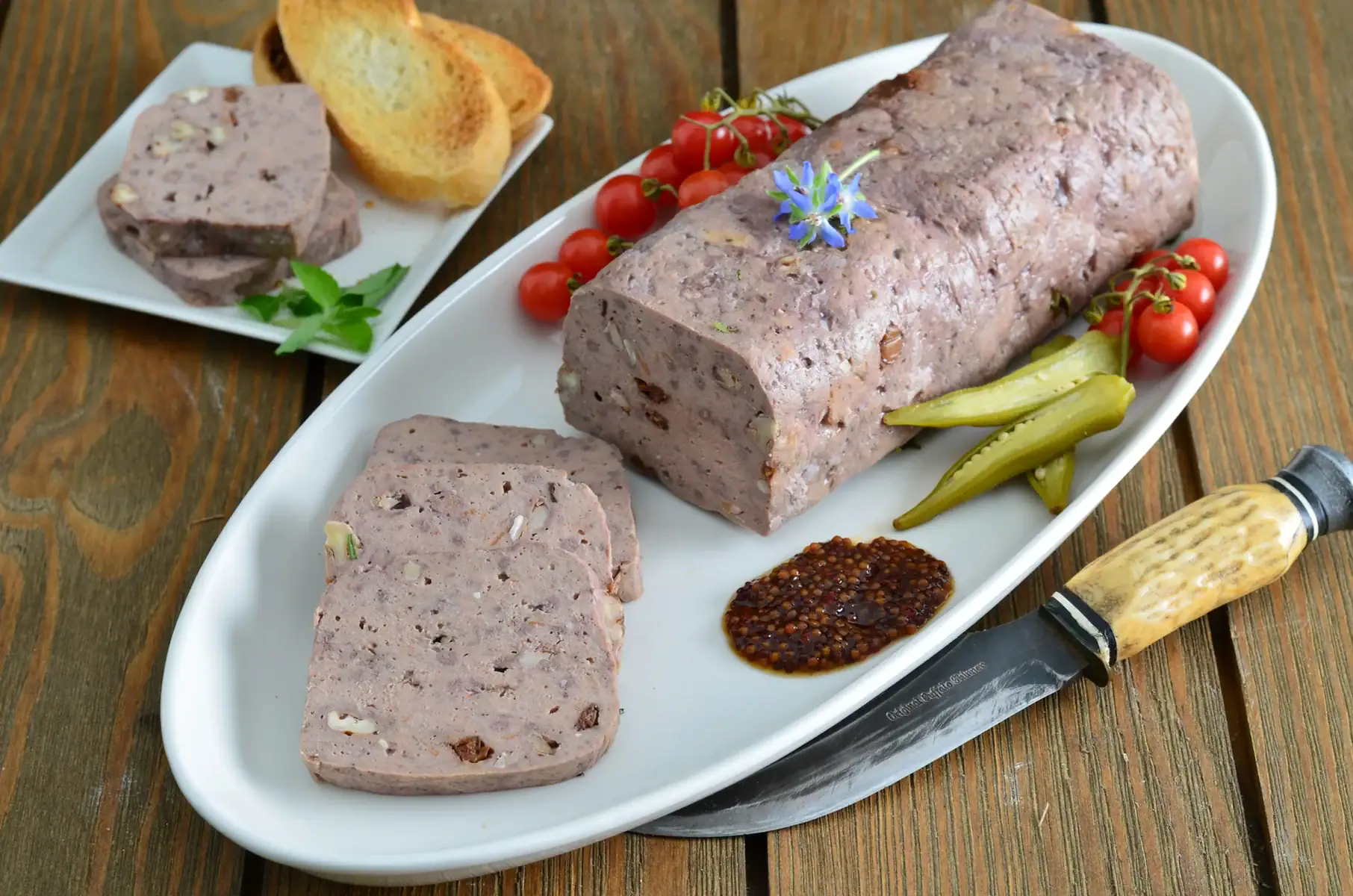
If you make this head cheese recipe, leave a review or comment. And if you have any cooking questions regarding this recipe or want to share your latest food photos, give me a shout on Instagram at @larry__white.
Hog Head Cheese Recipe
Equipment
- 1 Large Pot or Slow Cooker
- 1 Large Mixing Bowl
- Plastic Wrap
Ingredients
For the Pork
- 4 pig trotters (or feet)
- 3 pounds whole boneless pork shoulder
Seasonings
- 8 garlic cloves
- 1 teaspoon black peppercorns
- 1/2 teaspoon red pepper flakes (optional)
- 3 bay leaves
- 1 onion (cut in half)
- 1 bundle fresh herbs (tied together – parsley, rosemary, and thyme)
- 3 tablespoons red wine vinegar
- 2 carrots (peeled)
- 2 stalks celery (cut in half)
For Finishing
- 3 cups reduced cooking liquid
- Kosher salt (as needed)
- Unflavored gelatin (optional, but I recommend having on hand)
Instructions
Cook the Pork
- Place the pig feet, pork shoulder, garlic, black peppercorns, red pepper flakes, bay leaves, onion, herbs, vinegar, carrots, and celery in a large pot. Cover everything with cold water, making sure the pork is fully submerged.
- Bring the pot to a boil, then reduce the heat to a gentle simmer. Skim off any foam that rises to the surface. Simmer uncovered for 3-4 hours, or until the pork shoulder is fork-tender and the meat around the pig feet is soft and pulling away from the bone.
- Cool the Meat and Strain the Liquid
- Remove the pork shoulder and pig feet with tongs or a slotted spoon and place them in a large bowl. Let them cool until safe to handle.
- Strain the cooking liquid through a fine mesh strainer or cheesecloth into a clean pot. Discard the vegetables, herbs, peppercorns, and bay leaves.
Reduce the Liquid
- Bring the strained cooking liquid to a simmer and reduce it by about half. Skim off visible fat from the surface as needed. You want about 2-3 cups of rich cooking liquid for molding the head cheese.
Test the Gel
- Pour a few tablespoons of the reduced liquid onto a small plate and chill it in the refrigerator. The liquid should set lightly firm and should not slide around the plate.
- Press it gently with your finger. It should spring back a little. If it does not set, reduce the liquid a little more and test again.
- If the liquid still needs help, dissolve a small amount of unflavored gelatin into the warm liquid and repeat the test before molding.
Pick and Cut the Meat
- Remove the meat from the pig feet and discard the bones, tough cartilage, and any pieces you do not want in the finished head cheese.
- Cut the pork shoulder into small pieces for a cleaner terrine-style slice, or chop and shred it for a more rustic texture.
Mold and Chill
- Line a loaf pan or terrine mold with plastic wrap, leaving enough overhang to cover the top.
- Add the pork mixture to the mold. Pour in just enough reduced cooking liquid to barely cover the meat. Fold the plastic wrap over the top and press gently so the meat settles into the liquid.
- Refrigerate overnight until fully set.
Serve
- Unwrap the hog head cheese and invert it onto a serving plate or cutting board. Slice with a sharp knife and serve chilled with crackers, crusty bread, mustard, pickles, or a sharp salad. You can also use it as a filling for sandwiches.
NOTES
- Use collagen-rich cuts: Pig feet or trotters help the cooking liquid set naturally. Pork shoulder alone will not give you the same texture.
- Simmer gently: Bring the pot to a boil, then lower it to a slow simmer. A hard boil can make the broth cloudy and break up the meat.
- Salt after reducing: Taste and salt the liquid after it reduces so it does not become too salty.
- Do the gel test before molding: Chill a spoonful of reduced liquid on a plate. If it does not set, reduce it more or add a small amount of gelatin.
- Use gelatin carefully: Added gelatin can help a weak set, but too much makes the texture stiff and rubbery.
- Slow cooker option: Cook the pork, pig feet, seasonings, vinegar, and aromatics on low for 6-8 hours. Strain and reduce the liquid on the stovetop before molding.
- Storage: Keep wrapped and refrigerated. Use within 3-4 days, or freeze tightly wrapped for up to 2 months for best texture.
Nutrition
Nutrition information is automatically calculated, so should only be used as an approximation. Nutrition is per serving.