
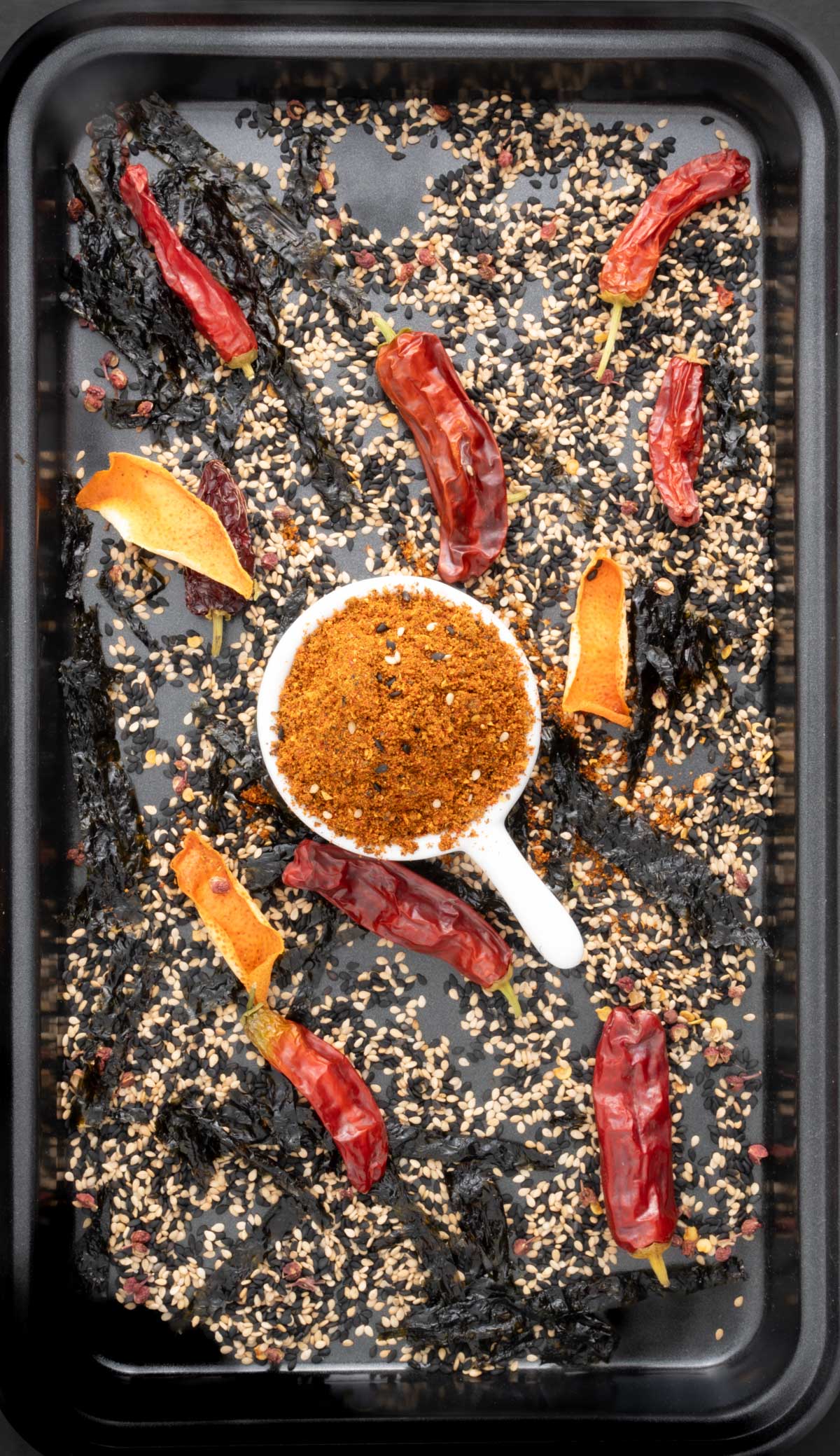
This homemade shichimi togarashi recipe is a Japanese seven-spice seasoning made with chili flakes, sesame seeds, dried orange peel, nori, ginger, and peppercorns. It delivers balanced heat with a flavor profile of citrusy, nutty, savory, and peppery notes. It’s perfect for finishing meats like grilled venison, seafood, rice bowls, noodles, and quick sauces.
Quick Look: Schichimi Togarashi
- Ready in: About 20 minutes
- Yield: About 1/3 cup
- Calories: 406
- Main ingredients: Chili flakes, sesame seeds, dried orange peel, nori, ginger, Sichuan or sansho peppercorns
- Cook method: Toasted and ground spice blend.
- Flavor profile: Citrusy, savory, nutty, peppery, and lightly spicy
- Best uses: Grilled venison, seafood, rice bowls, noodles, soups, eggs, aioli, and compound butter.
- Why this version works: Toasting the sesame, chile, peppercorns, and orange peel builds balanced flavors without being overly bitter.
SUMMARIZE & SAVE THIS CONTENT ON
Togarashi can simply mean Japanese chile pepper, but when most people search for togarashi seasoning or togarashi spice, they are usually looking for shichimi togarashi. The process, for my version, is practical for almost any home cook. Toast the right ingredients gently, cool them completely, and grind them gently to a coarse texture. It’s that easy.
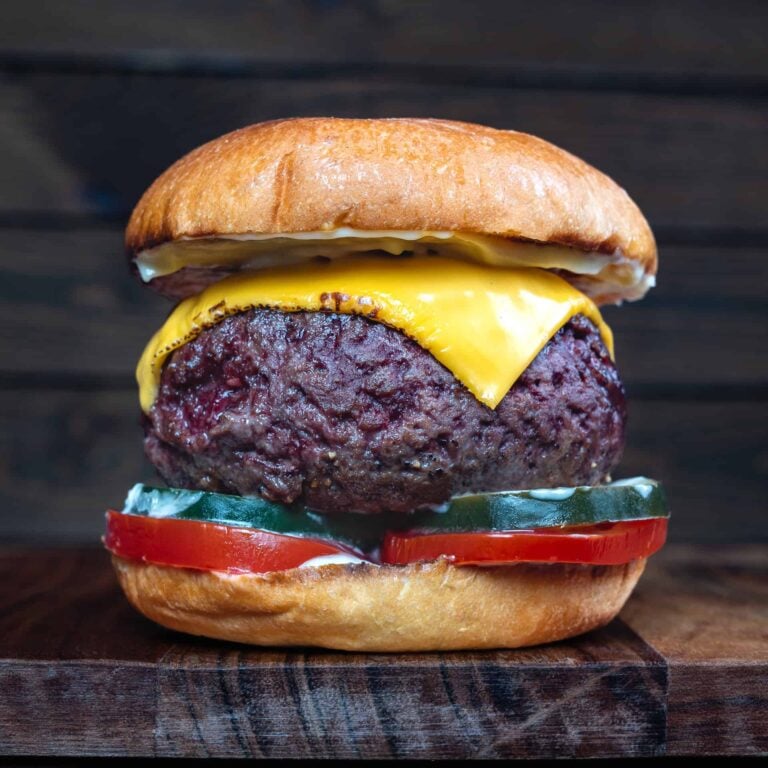
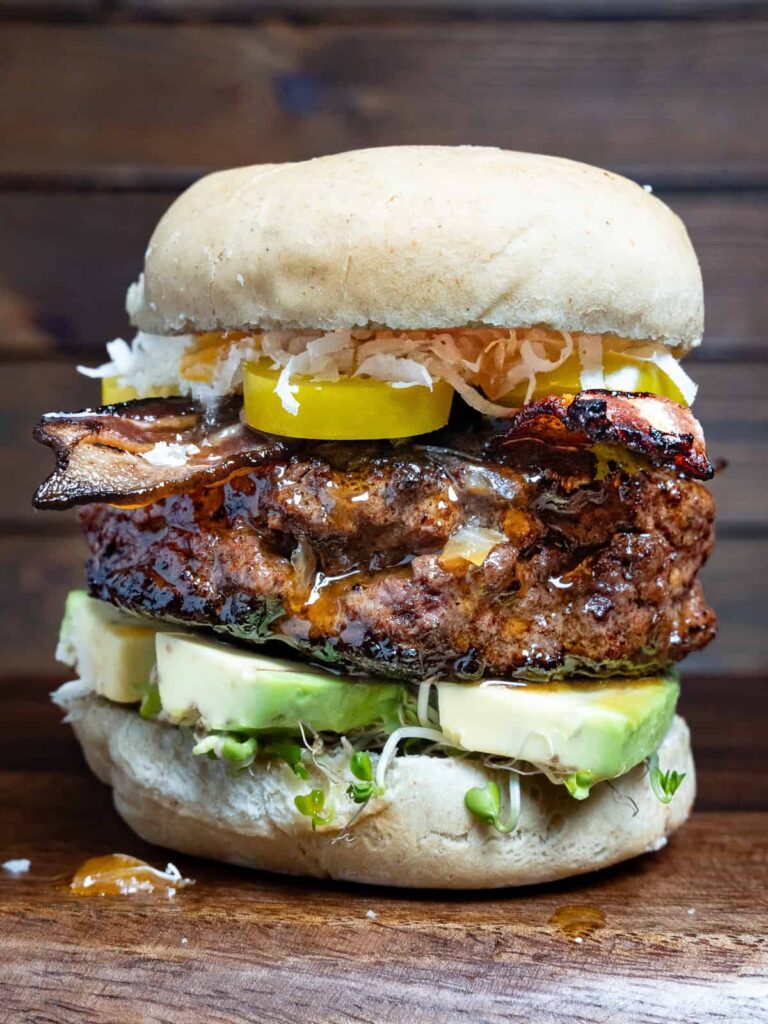
I like to pair the flavors of citrus, sesame, chile, and nori with foods that complement them. It works well sprinkled over red meat, steamed oysters, citrus marinated shrimp, and my personal favorite, shrimp toast. For a quick “togarashi sauce”, stir a pinch of it into my gochujang aioli. It’s absolutely stellar on burgers, shrimp, oysters, fries, or rice bowls.
What Is Togarashi?
Togarashi usually refers to Japanese chile pepper. In cooking, especially outside Japan, the word is also used as shorthand for shichimi togarashi, the Japanese seven-spice seasoning blend.
That distinction matters to cooks who want to make their own or order a bottle online. Straight chile powder mainly gives you heat. Shichimi togarashi gives you a little heat with citrus, sesame, seaweed, ginger, and peppery spice in one blend. It has a distinct aroma, texture, and flavor profile you’re likely not to find anywhere else. So if you landed here wondering what togarashi is, the clean answer is this: togarashi can mean chile pepper, but this recipe is for shichimi togarashi, the seven-spice seasoning blend.
What makes Homemade Togarashi Great
It is well-balanced: The chili flakes and peppercorns bring the heat. The orange peel, sesame, nori, and ginger give it a pop of bright flavors with a little umami.
The spices get toasted first: A short toast over medium-low heat wakes up the sesame seeds, chili flakes, peppercorns, and orange peel before grinding. If you skip this step, you’re missing out on a lot of flavor.
The proper texture: You get to control the texture by making it at home. This seasoning does not need to be ground into a dusty powder. A slightly coarse texture gives the sesame and nori more presence.
It works best when used after cooking: Shichimi togarashi flavors are more pronounced when used as a finishing seasoning. Sprinkle it on right before serving so the citrus, chile, and seaweed keep their sharp tastes.
It’s highly versatile: This blend works with pretty much any protein you can throw at it (wild game included). It’s also excellent on vegetables, rice, grilled corn, and, believe it or not, popcorn.
Types of Togarashi Explained
These names get confusing, especially when you start looking at a row of spice jars. For this recipe, we are making homemade shichimi togarashi. Below are the differences.
Shichimi togarashi: This is the Japanese seven-spice blend. It usually includes chile, citrus peel, sesame seeds, seaweed, ginger, and a peppery spice like sansho.
Nanami togarashi: This is often sold as a very similar seven-spice seasoning. Depending on the brand, the ratio of chile, citrus, sesame, seaweed, and peppery spices can vary. For everyday cooking, I treat it as very close to shichimi togarashi.
Ichimi togarashi: This is a straight chile powder. This one has intense heat and should be used moderately if you’ve never tried it.
Key Ingredients
Scroll to the recipe card for exact amounts.
Where to find the ingredients: Check Asian markets, spice shops, well-stocked grocery stores, or online. Nori, sesame seeds, chili flakes, ginger, and Sichuan peppercorns are usually easier to find than sansho.
Red pepper chili flakes: This is the heat source of the blend. Use less if you want a milder togarashi seasoning.
Dried orange peel: Citrus is what keeps shichimi togarashi bright. It cuts through the chile and sesame and gives the seasoning a sharp, fragrant edge.
White and black sesame seeds: Sesame adds nuttiness and texture. Toasting the seeds first gives the finished blend more aroma.
Sichuan or sansho peppercorns: Sansho is more traditional, but Sichuan peppercorns are easier to find and work well here. Start off with the recommended amount. They bring a peppery, lightly numbing bite.
Ground nori: Nori gives the blend its savory seaweed note.
Ground ginger: Ginger adds warmth that pairs well with the chile and citrus. Not so much that it overpowers the blend.
Substitutions and Adjustments
If you cannot find sansho: Use Sichuan peppercorns. They are not exactly the same, but they bring a similar peppery bite.
If you cannot find dried orange peel: Use dried tangerine peel or dried lemon peel. Do not use fresh zest unless you plan to use the blend right away. Fresh zest adds moisture, which can cause mold to form
If you want less heat: Reduce the chili flakes or use a mild chile powder. I sometimes dry shishito peppers from the garden and grind them into a mild powder for this kind of blend.
If you do not have a spice grinder: Use a mortar and pestle. The texture will be more rustic, but that is fine for a finishing seasoning.
How To Make Shichimi Togarashi
- Toast the spices: Preheat a large skillet over medium-low heat. Add the sesame seeds, chili flakes, and peppercorns. Toast for 2 to 3 minutes, stirring often, until fragrant. Do not walk away from the pan. Chili flakes and sesame seeds can go from toasted to bitter fast.
- Cool the toasted spices: Pour the toasted spices onto a plate and let them cool. Spread them out so they cool faster.
- Toast the orange peel separately: Add the dried orange peel to the same skillet and toast for about 2 minutes. It should smell citrusy and warm, not scorched. Pour it onto the plate with the other spices.
- Let everything cool completely: This step is very important. Warm spices can steam inside the grinder, causing the blend to clump.
- Grind the blend: Add the cooled toasted ingredients, ground nori, and ground ginger to a spice grinder. Work in batches if needed. Grind until the mix is combined but still slightly coarse.
- Mix and store: Stir the blend well and transfer it to an airtight spice jar. Store it in a cool, dark pantry.
Chef Tips
Toast gently: Medium-low heat is the best move here. High heat will burn the chili flakes and sesame seeds before the aroma develops. If your stove top isn’t reliable, use low heat. Scorched spices will make the seasoning extremely bitter.
Toast the peel separately: Dried orange peel is larger and toasts differently than chili flakes and sesame seeds. Toasting it on its own helps bring out the citrus without scorching the smaller spices.
Cool before grinding: This is a very important step. Let the toasted ingredients cool completely before grinding. Warm spices can trap moisture and clump.
Keep it slightly coarse: You are not looking for a dusty powder. A coarse texture lets you really taste the sesame and nori.
Adjust heat with chili flakes: If you want a milder blend, reduce the chili flakes. Do not cut back too much on the citrus, sesame, or nori, or the seasoning loses its flavor profile.
Use it after cooking: This is best used as a finishing seasoning. If you cook with it, the chile, citrus, and seaweed lose a lot of their pronounced flavors.
How to Use Togarashi Seasoning
Use shichimi togarashi as a finishing seasoning. Sprinkle it over food right before serving so the citrus, chile, sesame, and nori stay aromatic.
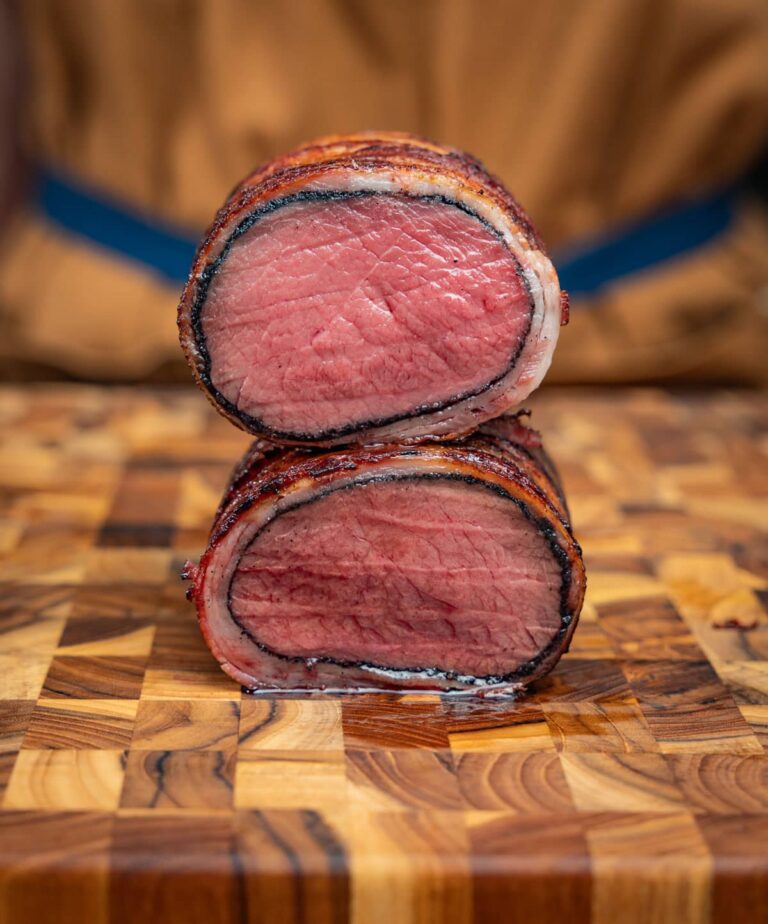
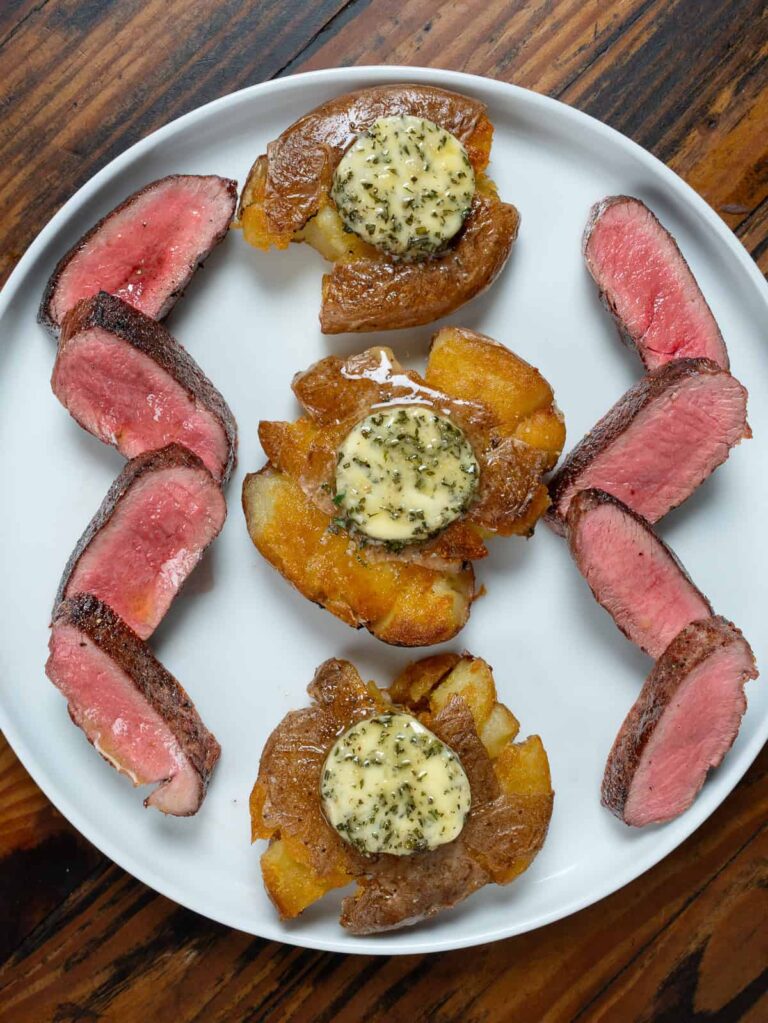
On grilled beef, lamb, and wild game: Try it over premium grilled cuts like venison loin, beef tenderloin, and lamb chops. It is especially good when the meat is sliced, rested, and finished with a little butter or sauce.
On your favorite shellfish recipes: I like to use it on shrimp, scallops, oyster, mussels, and crab. The citrus and chile also work well with lobster when blended with butter.
In sauces: The flavors really pop when you mix the seasoning in with mayo-based sauces.
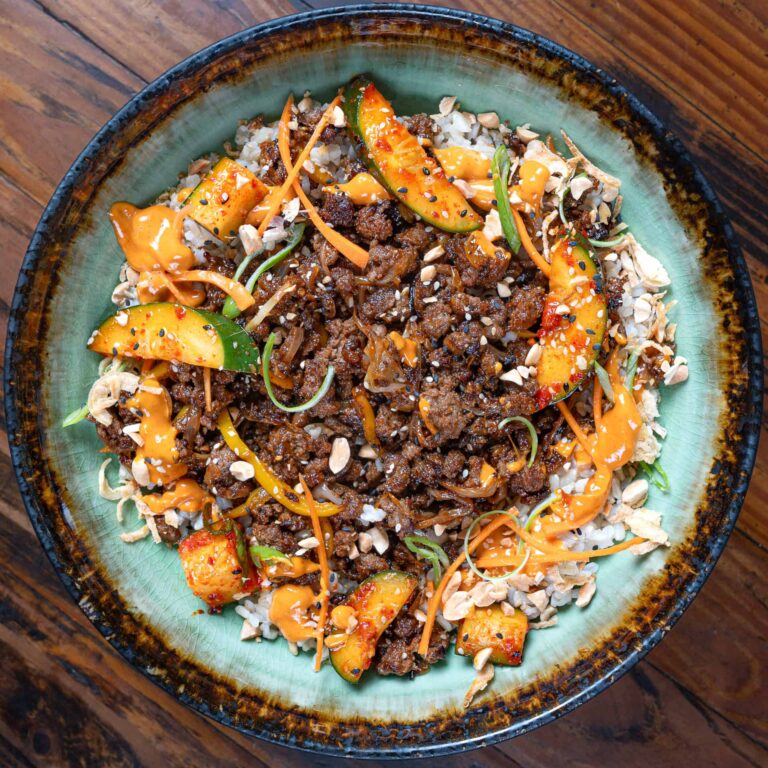
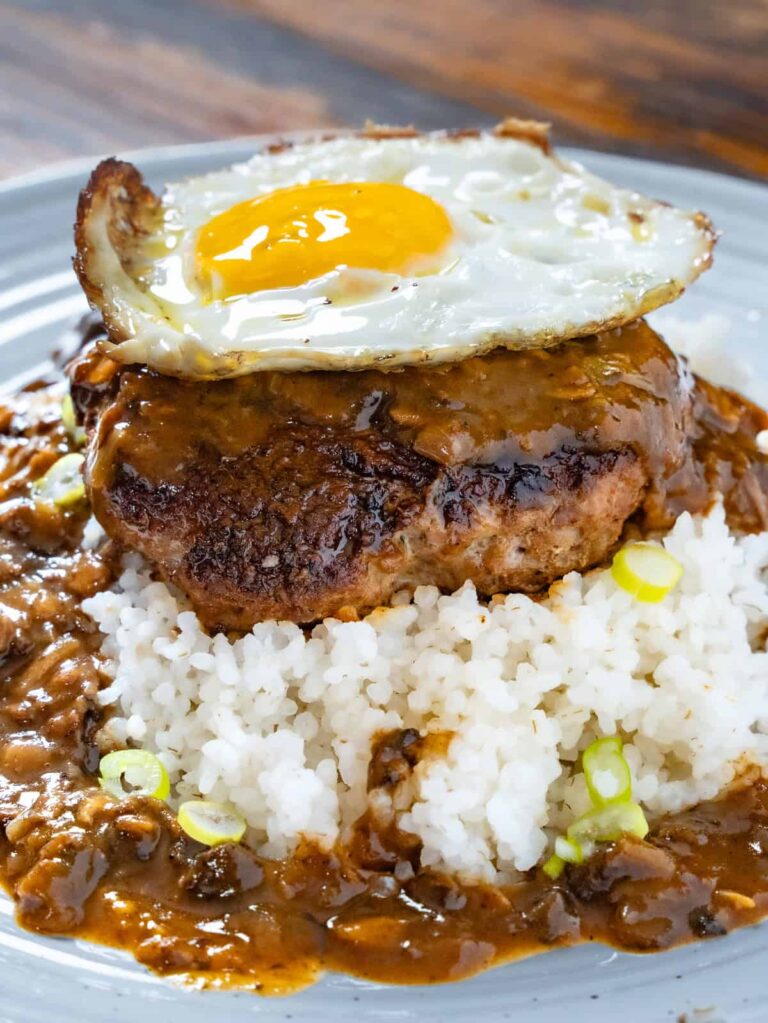
On rice bowls and noodles: Sprinkle it over rice bowls, ramen-style soups, udon, soba, fried rice, or noodle bowls right before serving.
On vegetables and snacks: Use it on vegetables like my spicy cucumber salad, fries, crispy potatoes, eggs, popcorn, or grilled corn.
Storage
Cool completely before storing: Do not jar the blend while any of the toasted ingredients are still warm.
Use an airtight container: A small spice jar with a tight lid works best.
Keep it cool and dark: Store homemade shichimi togarashi in a pantry or spice cabinet away from heat and light.
Best flavor window: The blend will keep for about 2 months. But the citrus, chile, sesame, and nori are most aromatic when used within two weeks.
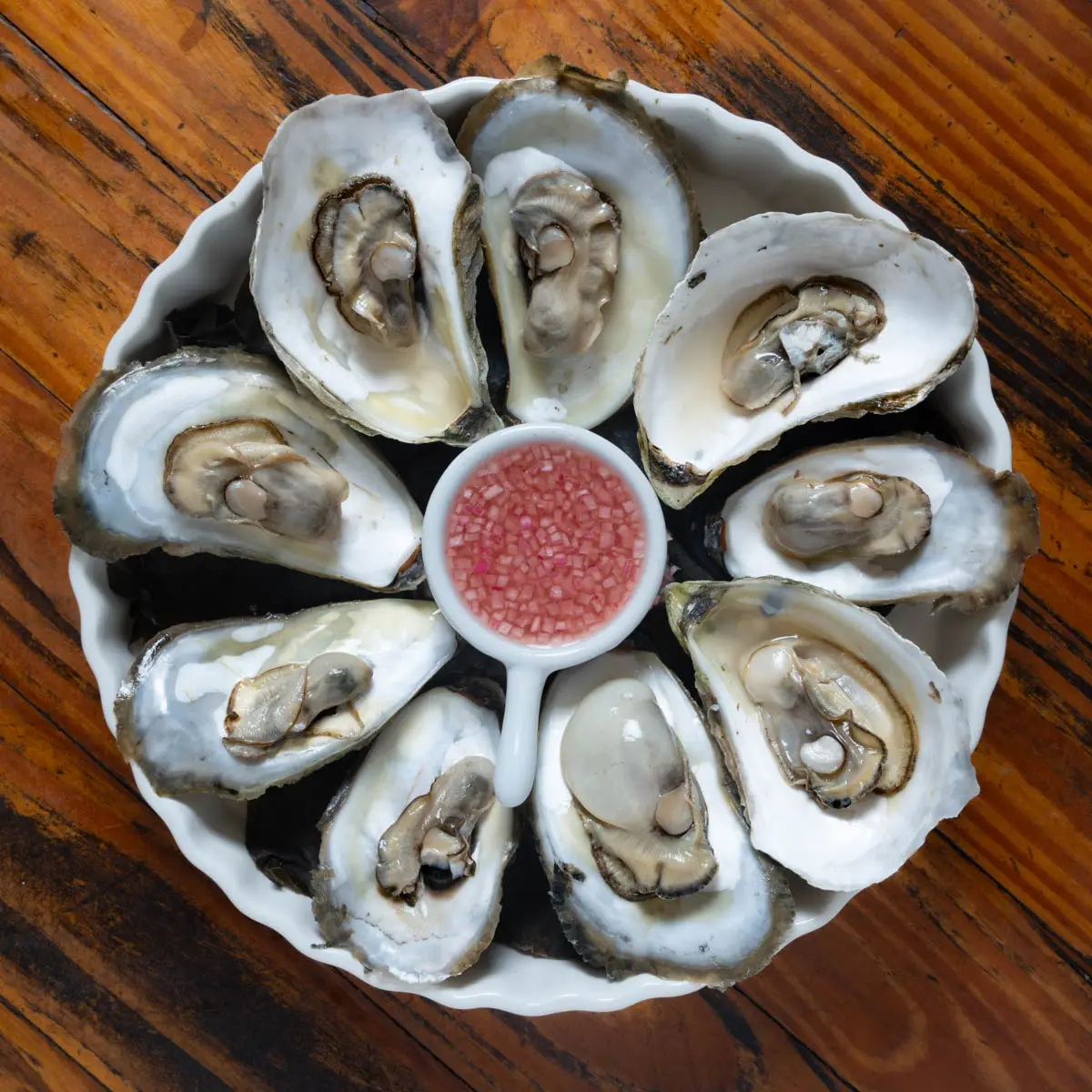
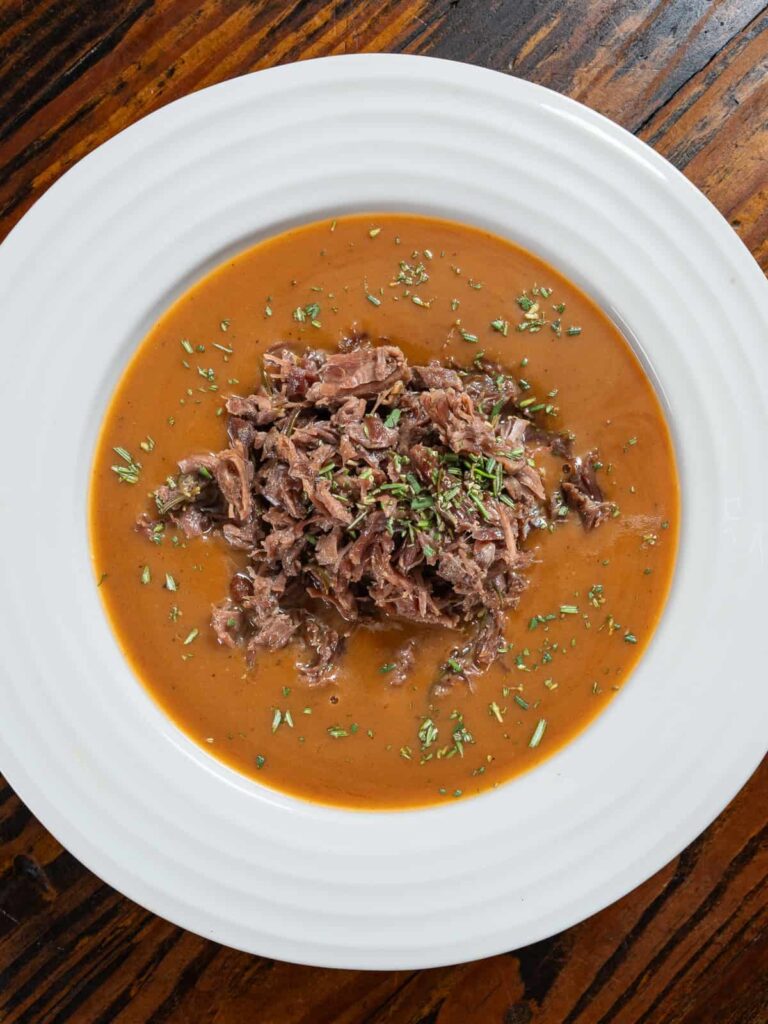
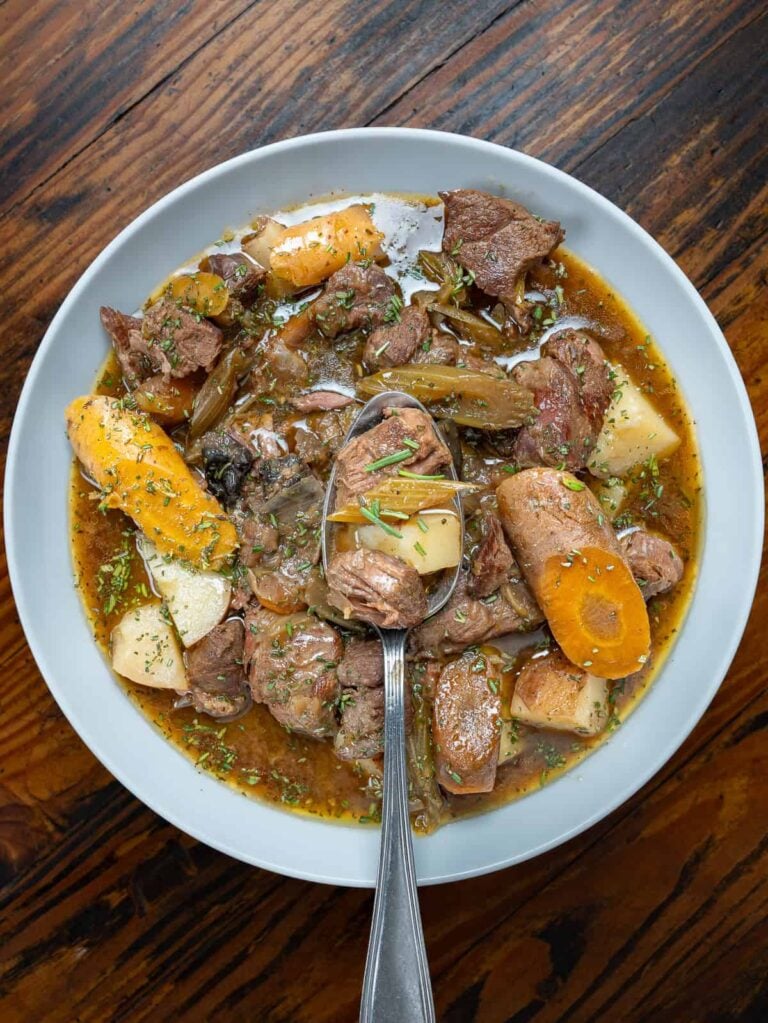
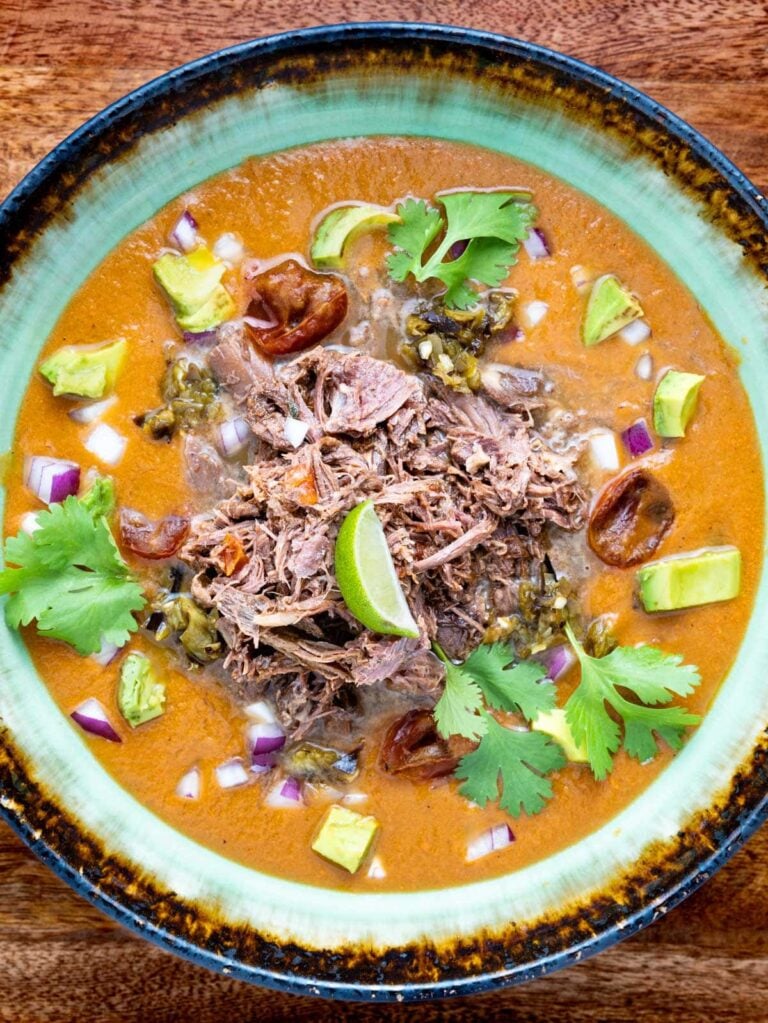
Recipes to use with your togarashi
Below are a few recipes I recommend using your new Japanese spice blend with.
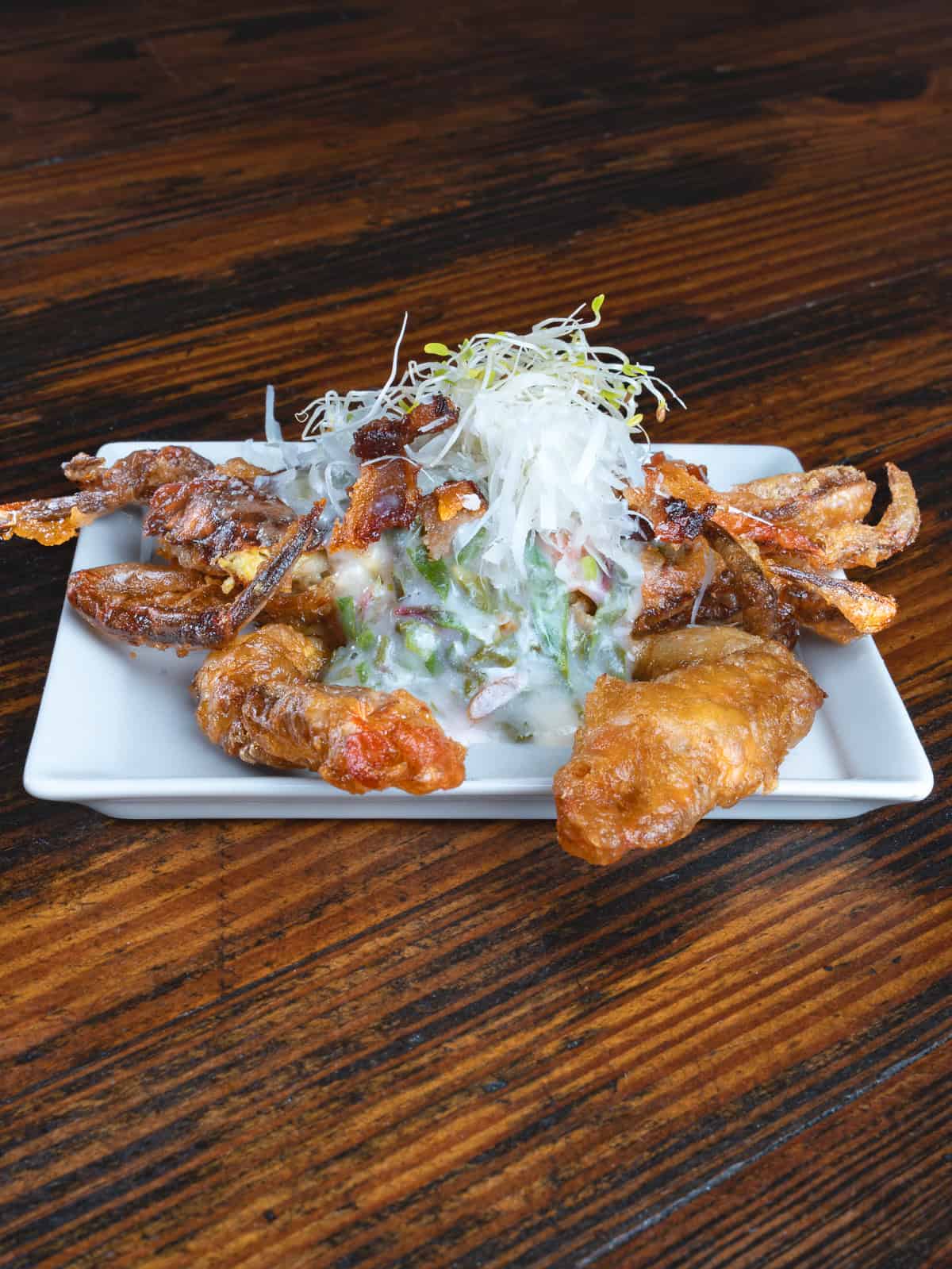
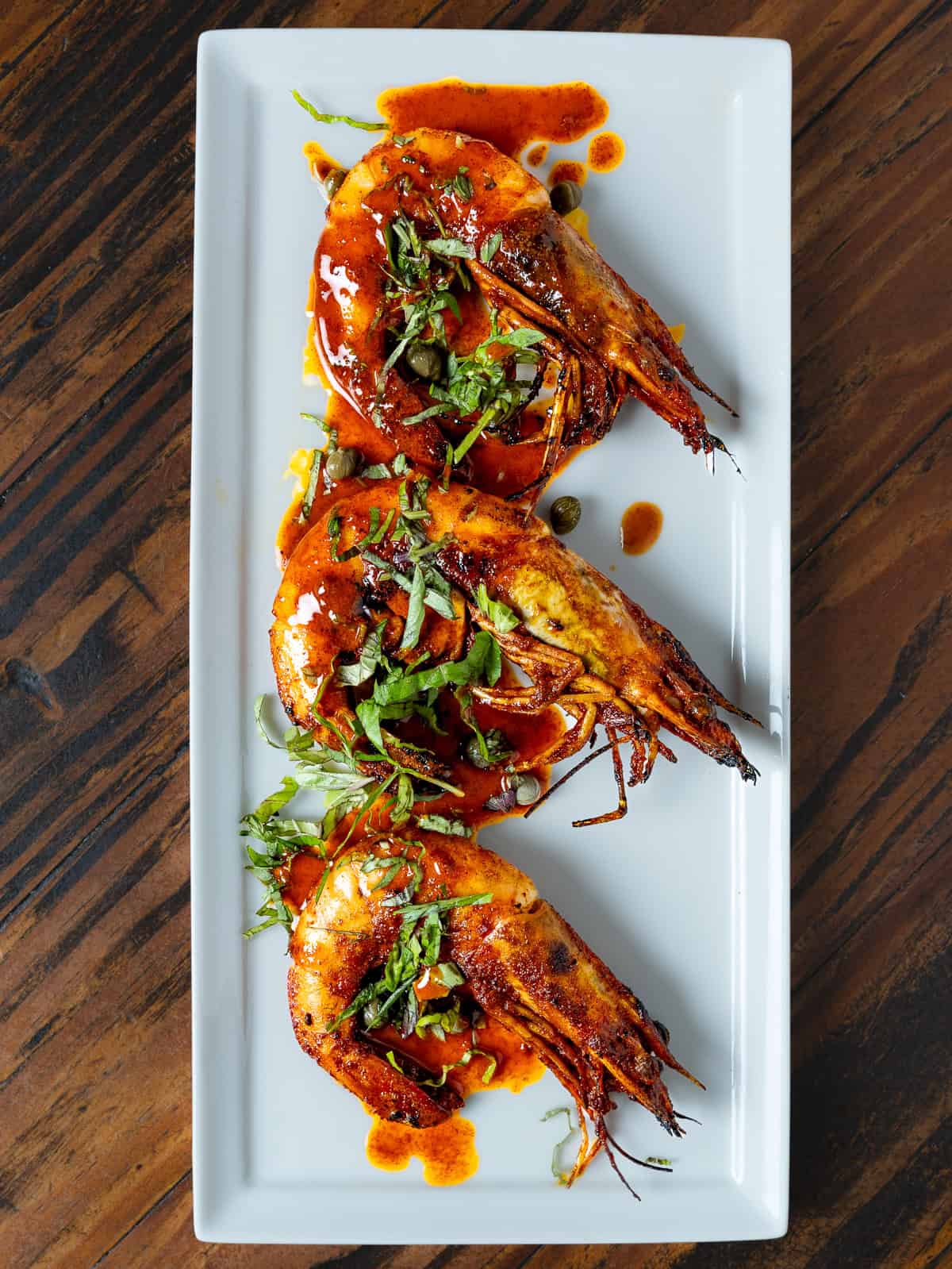
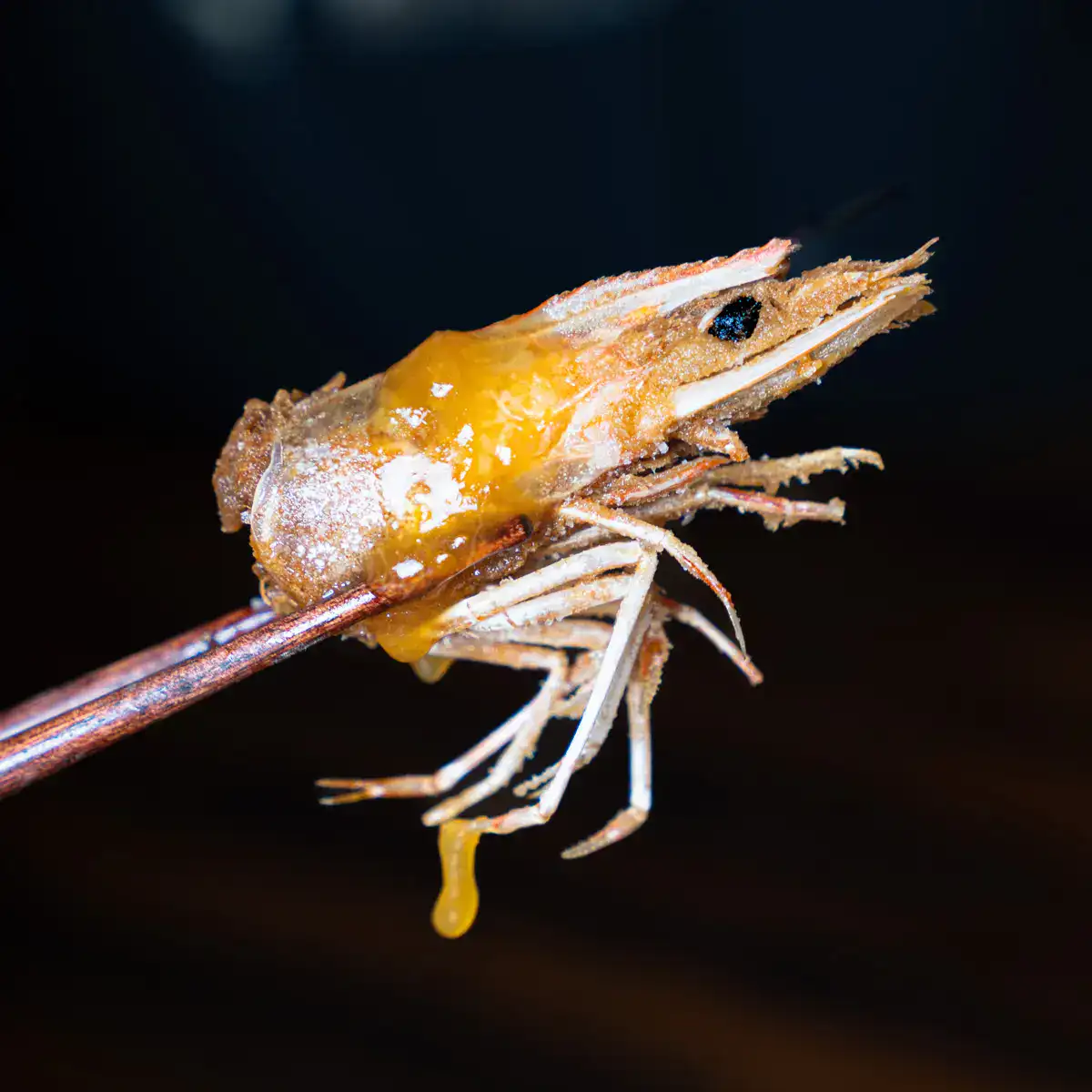
If you make this togarashi, drop a comment or leave a review. And if you have any cooking questions or want to share your latest food photos, give me a shout on Instagram at @larry__white.
Homemade Shichimi Togarashi
Ingredients
- 1 teaspoon ground nori (toasted seaweed used for some types of sushi)
- 2 teaspoons white sesame seeds
- 2 teaspoons black sesame seeds
- 1 tablespoon plus 1 teaspoon dried orange peel
- 2 tablespoons red pepper chili flakes
- 1 1/2 teaspoons Sichuan peppercorns (or sansho peppercorns)
- 1 teaspoon ground ginger powder
Instructions
- Preheat a large skillet over medium-low heat. Add the sesame seeds, chili flakes, and peppercorns to the pan. Toast for 2 to 3 minutes, stirring often and making sure they do not burn. Pour onto a plate to cool.
- Add the dried orange peel to the pan and toast for about 2 minutes. Pour onto the plate with the toasted spices and let everything cool completely.
- Once all of the toasted ingredients are completely cooled, add them to a spice grinder with the ground nori and ground ginger. Grind in batches if needed. The sesame seeds do not need to turn into a fine powder.
- Mix the spices together well and store in an airtight container in a cool, dark pantry. The blend will keep its best freshness for about 2 months.
NOTES
- Toast the spices gently. Toast the sesame seeds, chili flakes, and peppercorns over medium-low heat for 2 to 3 minutes, stirring often so they do not burn. Burned chili flakes or sesame seeds will make the whole blend taste bitter.
- Cool everything completely. Let the toasted ingredients cool before grinding so the mix stays loose instead of clumping in the grinder.
- Toast the peel separately. Toast the dried orange peel on its own for about 2 minutes to dry it out and intensify its aroma without scorching the smaller spices.
- Do not over-grind it. Grind in batches if needed, and do not worry if the sesame seeds do not turn into a fine powder. A slightly coarse texture is fine.
- Adjust the heat level. Use less chili flake for a milder blend, or swap in a mild chili powder for part of it if you want less bite.
- Store it airtight. Keep the finished togarashi in an airtight container in a cool, dark place for about 2 months.
Nutrition
Nutrition information is automatically calculated, so should only be used as an approximation. Nutrition is per serving.





1 thought on “Homemade Shichimi Togarashi”
“Chef, this Japanese togarashi recipe is absolutely fantastic! I loved how it elevated even simple dishes like rice and grilled veggies. Thank you for sharing such a flavorful and authentic blend!”