
This Venison Jerky Recipe turns lean cuts of deer into a chewy, shelf-stable snack you can make at home with nothing more than a knife, a marinade, and a dehydrator. I slice hind-leg roasts thin, marinate them in a chipotle and apple cider blend for 24 to 36 hours, then dry them low and slow at 145–155°F until they bend and crack instead of snap. The cider brings out a natural sweetness that balances the smoky heat of the chipotles, and the result is the best venison jerky I’ve made in almost twenty years of hunting and running a professional kitchen.
If you love making jerky at home, try this ground venison jerky using ground deer meat for a completely different style of jerky.

Quick Look: Venison Jerky Recipe
- Ready in: 30 minutes to prep + 24-48 hours to marinate + 6 hours to dry
- Serves: 3 lbs of raw venison makes about 20 1-ounce portions
- Calories: 104
- Main ingredients: Venison, apple cider, and chipotles in adobo.
- Cooking method: Marinate and dehydrate
- Why this version works: The cider’s natural sweetness balances the smoky heat of the chipotles, giving the jerky a deeper, more rounded flavor than a straight soy-and-pepper marinade.
SUMMARIZE & SAVE THIS CONTENT ON
I didn’t set out to make a “Fall” jerky when developing this recipe. I was rummaging through my pantry one October, and a jug of cider from my buddy’s orchard happened to be sitting beside a can of chipotles I bought to make deer chili.
Then it struck me that this could be an amazing sweet and spicy combo. So, I figured I’d throw them together and see what happened. After several batches and a lot of trial and error, this is the recipe that I landed on.
The first batch was too sweet and not nearly smoky enough. The second was better, but needed a bit more heat. What can I say, I’m a chile head. By the third batch I’d worked out the perfect ratio of cider to soy to adobo. By the fourth, I’d figured out that a little curing salt gives it that edge of umami flavor that was missing.
I still make this recipe, usually in a batch big enough to fill a gallon bag for the treestand and another for my kids’ lunches. If you’re interested in more deer jerky recipes, check out my smoked jerky and these smoked deer sticks.
Why This Recipe Works
- The cider does more than add sweetness. Its natural sugars caramelize slightly during drying, which rounds out the smoke and acidity from the chipotles in adobo instead of just making the jerky sweet.
- A long marinade compensates for dehydration. Venison loses moisture and concentrates flavor as it dries, so a 24- to 36-hour soak seasons the meat deeply and helps the flavor hold up after the drying process.
- The right cut means the right chew. Deer hind leg cuts like top round, bottom round, and eye of round (often labeled venison round steaks from the processor) sliced into clean, even strips with barely any connective tissue to fight through. The sirloin tip works, but there is a decent amount of connective tissue. Backstraps work too if you’re not using them for steaks, and it gives you a slightly more tender texture.
- You have drying options. The same marinade and temperature range work in a dehydrator or an oven, so you don’t need to buy new equipment to make a great batch.
- You control the seasoning before adding the meat. Taste and adjust the marinade’s salt, sugar, and heat level. Because once you start the drying process, you can’t go back.
Notes on Ingredients
See the recipe card for full information on ingredients and quantities.
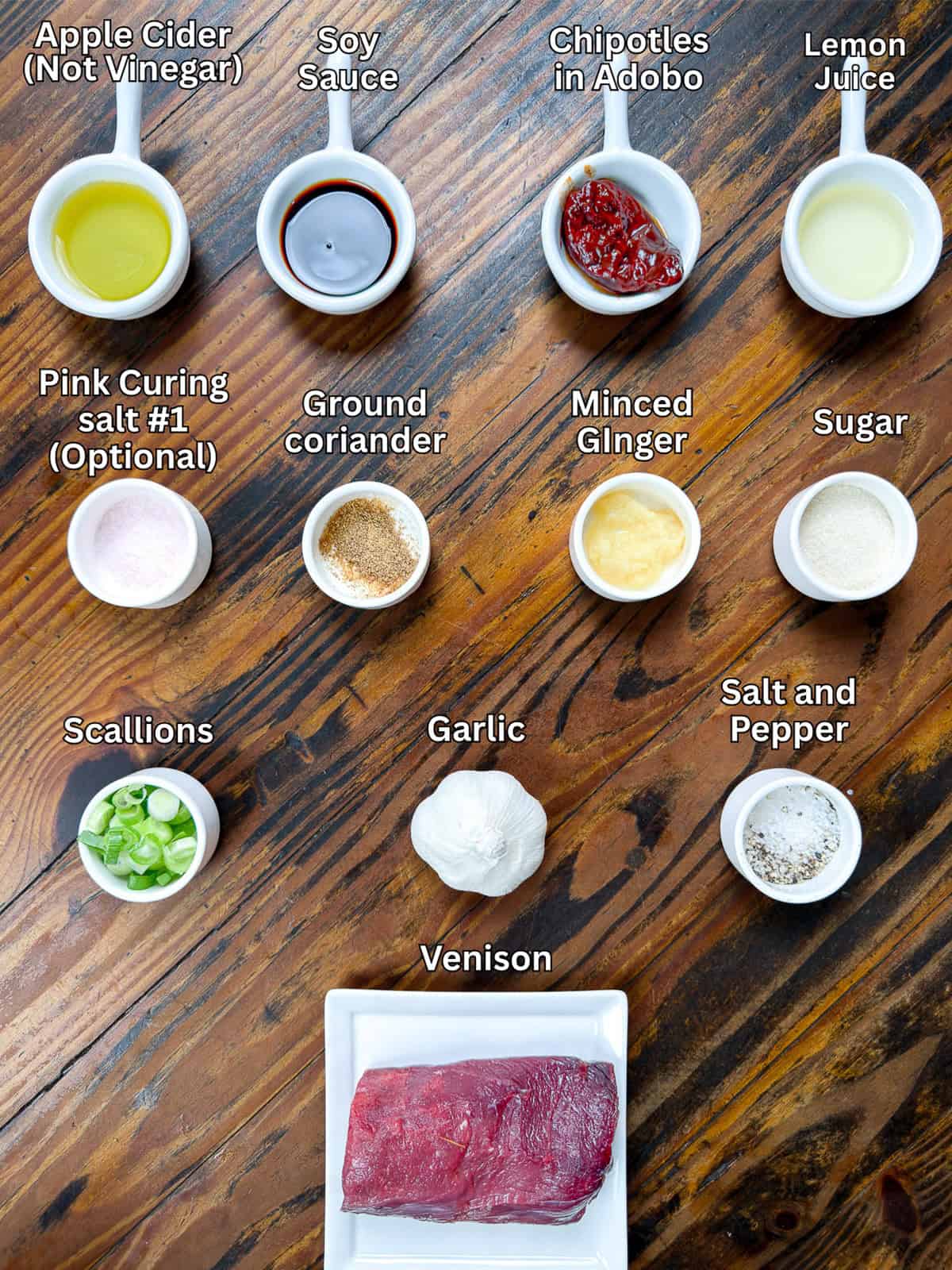
- Venison cuts: I recommend the top round, bottom round, or eye of round. These cuts are lean, uniform in shape, and slice into clean, even strips with almost no connective tissue to work around.
This makes venison jerky with a more consistent chew from piece to piece. Backstrap and sirloin tip work fine too. But I’d save the loin for steak night and the sirloin to make a deer roast. Whatever cut you choose, trim off every bit of silverskin if you like less chew. Trim the surface fat as well because venison fat turns rancid quickly and will shorten the shelf life of your finished jerky. - Chipotles in adobo: These are smoked jalapeños packed in a rich, seasoned tomato sauce, and they’re the backbone of the smoky heat in this recipe. You’ll find them at most grocery stores, any Mexican market, and online.
Use more for a hotter batch, or hold back for something milder. If you love spicy and sweet dishes, try these slow cooked venison shanks. - Apple cider (not vinegar): Use natural, unfiltered apple cider, the kind you’d drink, not cider vinegar. It carries real apple flavor without the additives in some bottled ciders, and it’s what gives this jerky its fall character.
Farmers’ markets and higher-end grocery stores are your best bet for the real thing. If you’d rather skip the heat altogether, my apple and ginger venison steak marinade uses a similar sweet-and-savory combination with no spiciness at all. - Curing salt (optional): Instacure No. 1 is a pink curing salt that helps prevent bacterial growth, improves the jerky’s color, adds a slight tang, and extends shelf life.
It’s optional at the 145–155°F range this recipe uses, but I’ve used it in my own batches for close to two decades and recommend it if you’re planning to store jerky for more than a couple of months or keep it somewhere unrefrigerated for an extended trip.
Substitutions and Additions
- Adjust the heat. Use more chipotles and a spoonful of extra adobo sauce for a hotter batch, or cut back on the chipotles and skip them for something the whole family can eat.
- Go sweet and smoky instead of spicy. Swap the chipotles for a couple of tablespoons of pure maple syrup and a few drops of liquid smoke. You’ll get a milder, crowd-pleasing jerky.
- Add a peppered finish. Skip the chipotles and add a heavy hand of cracked black pepper just before dehydrating.
You can also make sausage using the same venison you’d use for jerky. Try my maple venison breakfast sausage and smoked venison summer sausage for other venison meals to make.
How To Make This Venison Jerky Recipe
One trick I find makes slicing much easier is freezing the meat briefly before slicing. Just pop it in the freezer for 30–60 minutes before you cut it. You want it firm, not frozen solid, so that it slices evenly. Even slices are the difference between a batch that dries perfectly and one that’s half-burnt and half-raw. Uneven slicing is the single most common reason a batch of jerky comes out wrong.
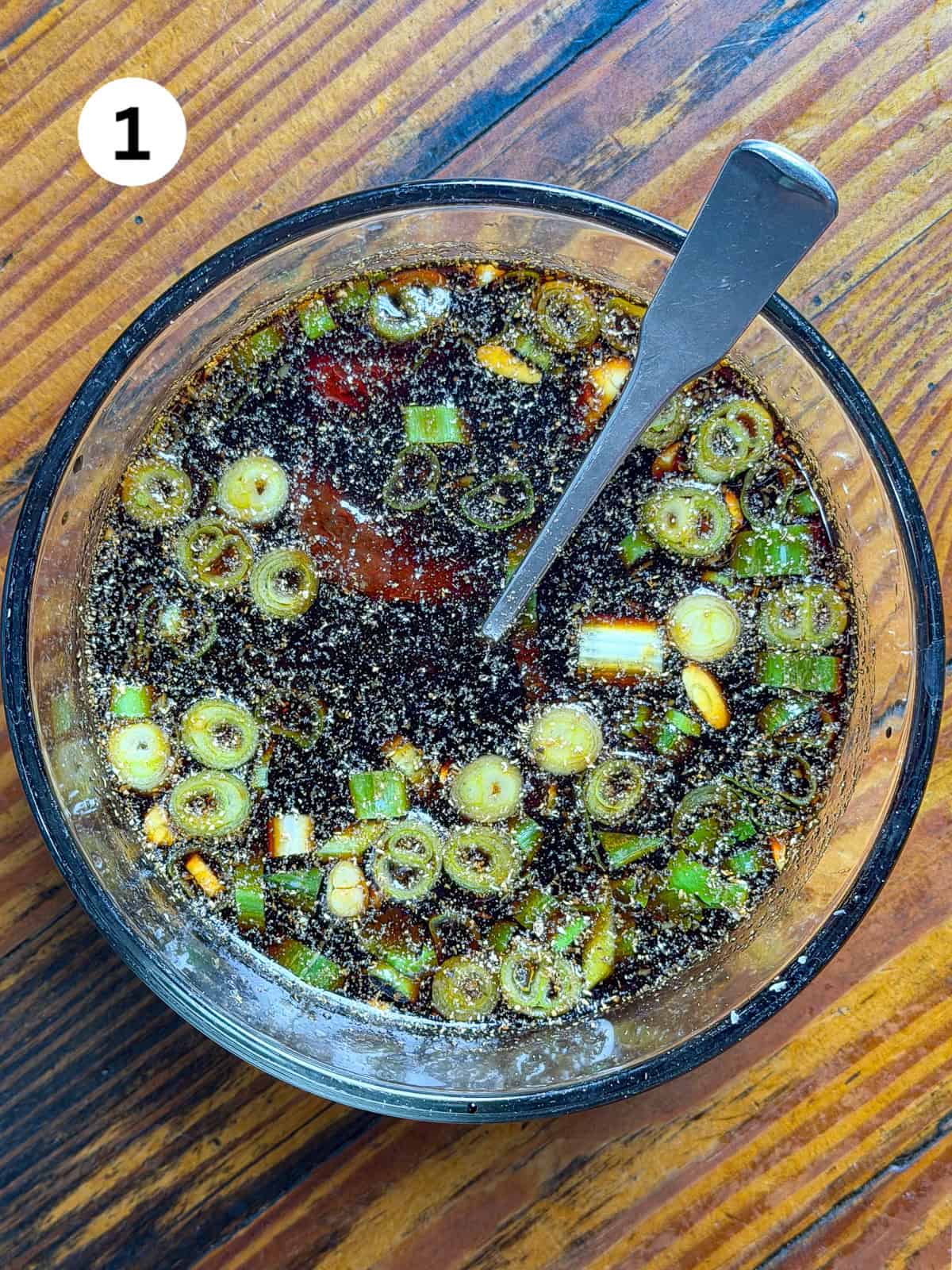
1. Make the Marinade. Combine all the ingredients except the deer meat in a non-reactive bowl. Stir until well combined. At this point, you can adjust the salt and sugar content to your liking.
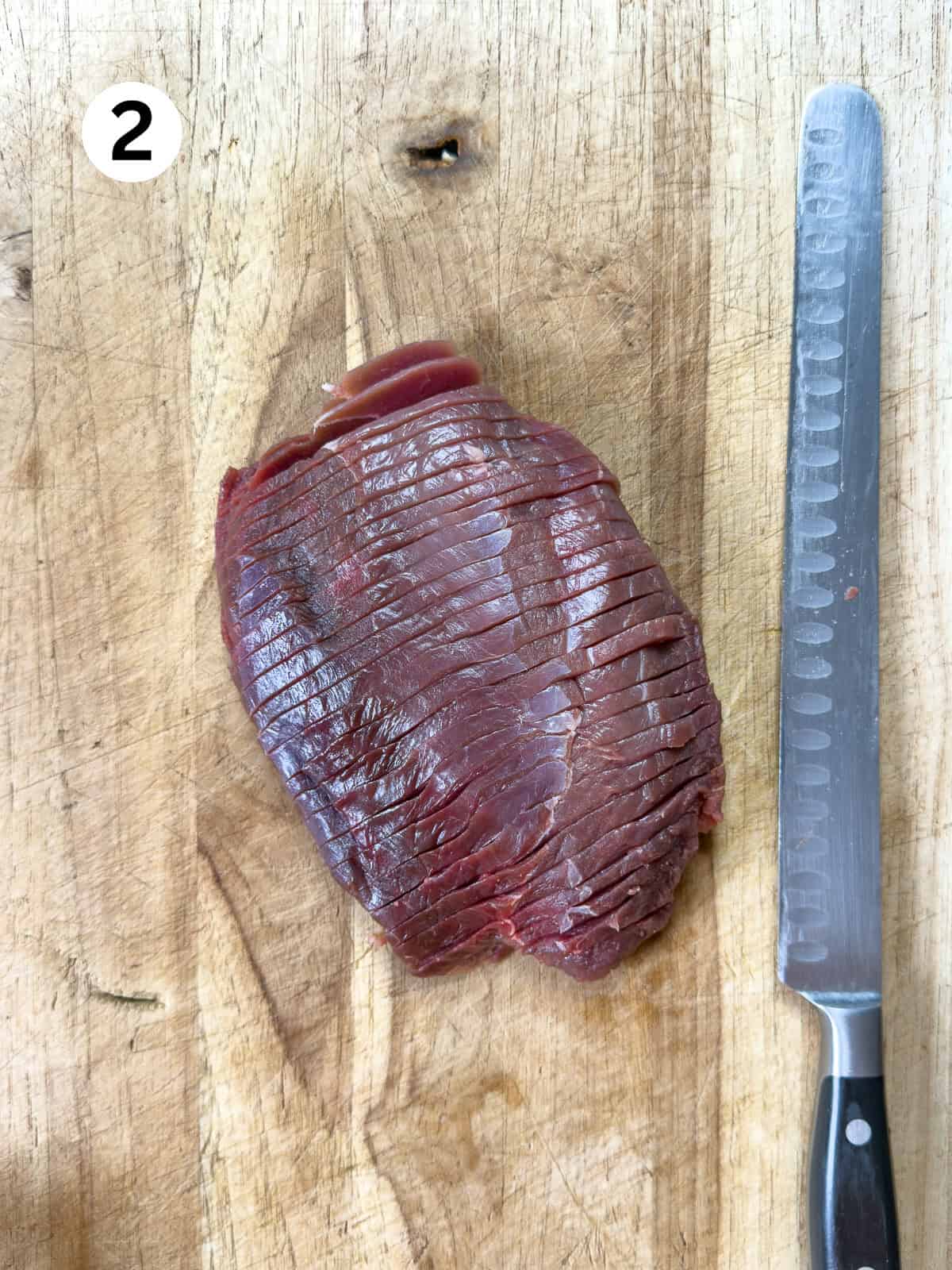
2. Cut the Venison. Use a very sharp knife or a meat slicer to cut the venison against the grain or with the grain into 1/8 to 1/4 inch slices. Thinner slices will cook up firmer, faster, and have a longer shelf life, while at 1/4″ the bite is chewier and takes 1–2 hours longer to dry.
The grain direction matters too. Slice with the grain for a long, chewy, biltong-style bite that holds up best in a hunting pack, or against the grain for shorter strands that tear apart easily.
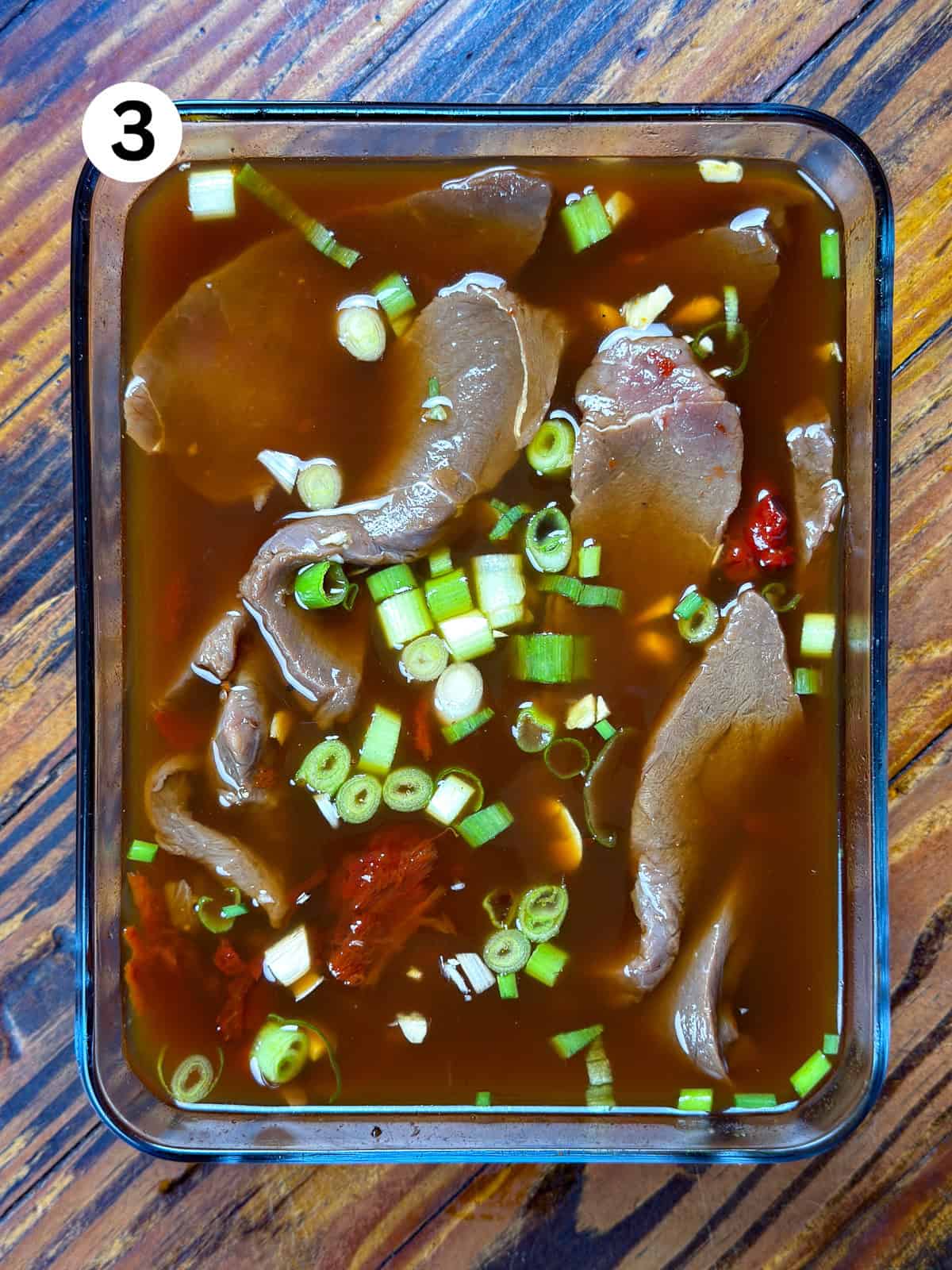
3. Marinate. Add the sliced venison to the marinade and mix until the meat is thoroughly coated. Pour the mixture into a non-reactive container just large enough to keep the meat submerged.
Alternatively, you can use a gallon freezer Ziploc bag as long as the meat stays submerged in the marinade. Marinate the venison for 24 to 36 hours.
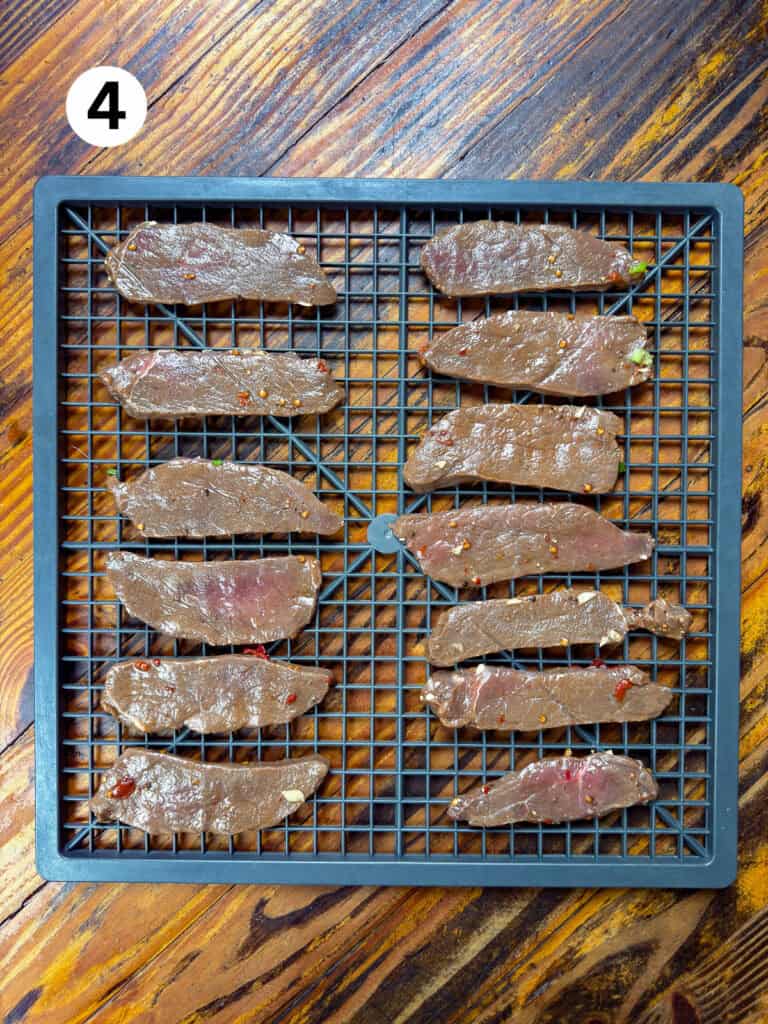
4. Prep for the Dehydrator. Drain the meat and discard any excess marinade. Place the venison strips in a single layer on the dehydrator racks, leaving space between pieces.
This lets air circulate around all sides of the meat. If you are using your oven, place the meat on metal wire racks inserted into cookie sheet pans.
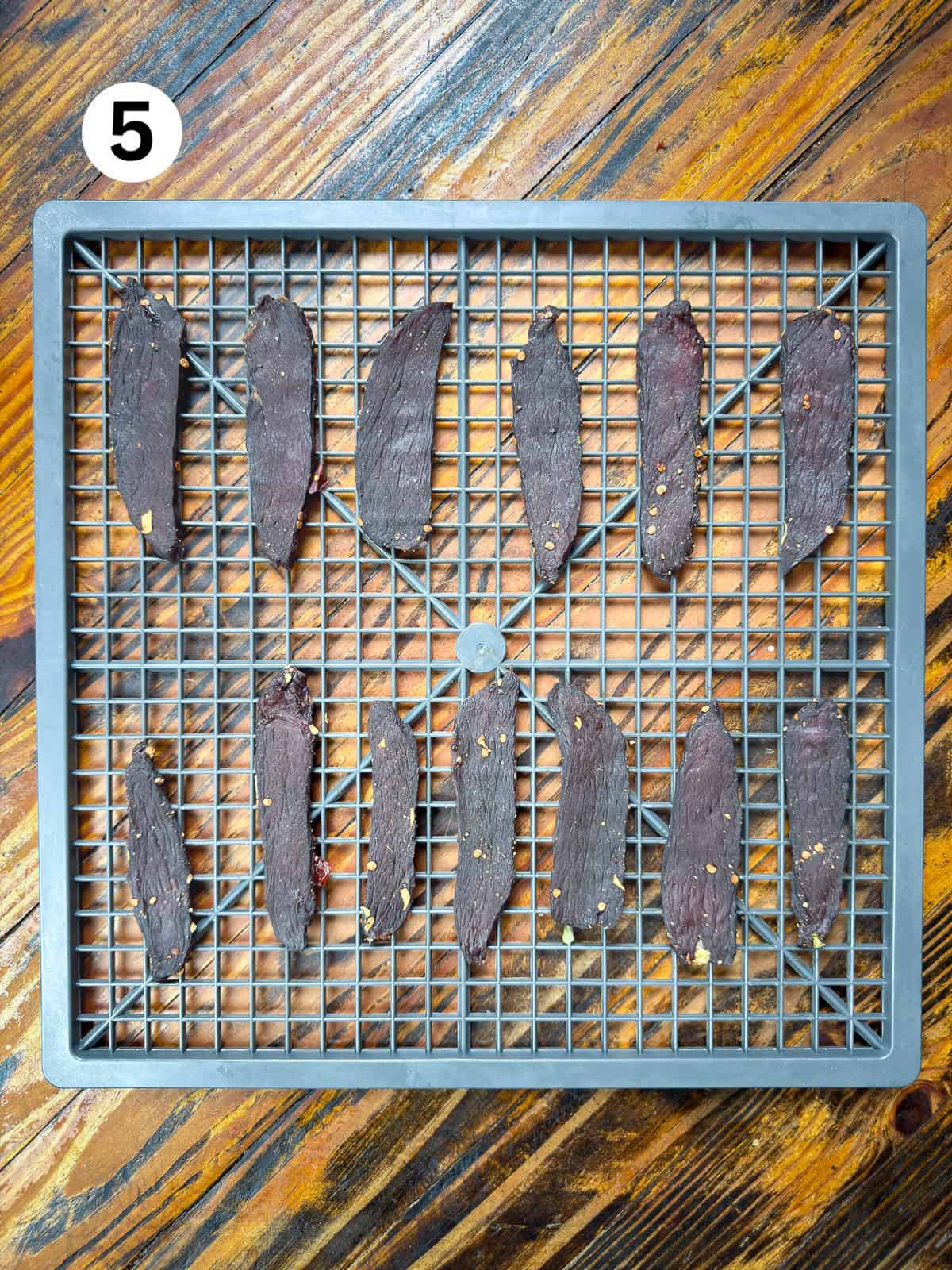
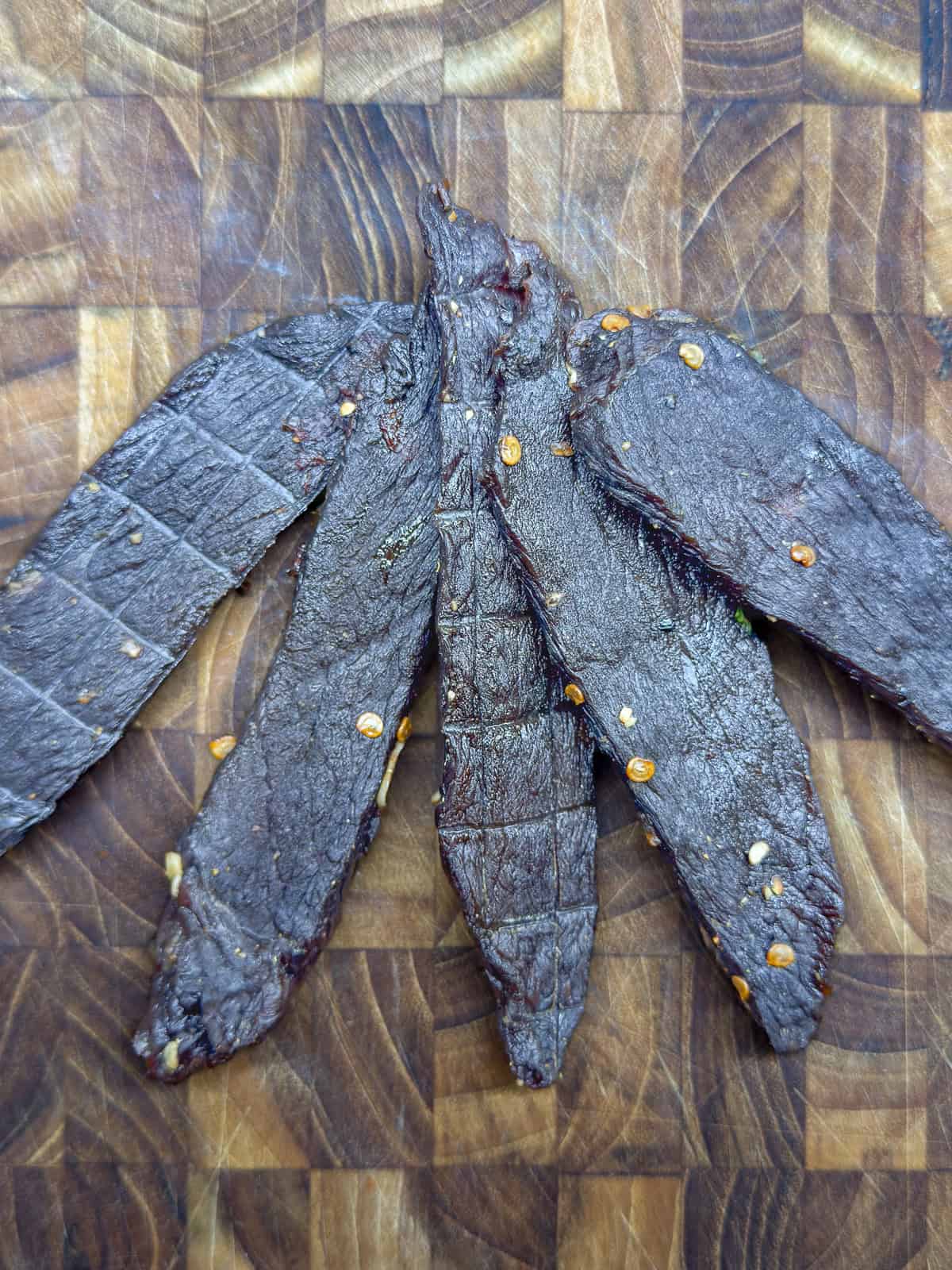
5. Dehydrate. Set the dehydrator or oven to 145-155° F. Place the venison inside to dry. It should take between 4-6 hours. To check if the jerky is done, let a piece cool completely and then bend it. Warm jerky always feels softer than it actually is. It’s ready when, after cooling, it cracks and shows white fibers at the bend without snapping cleanly in two.
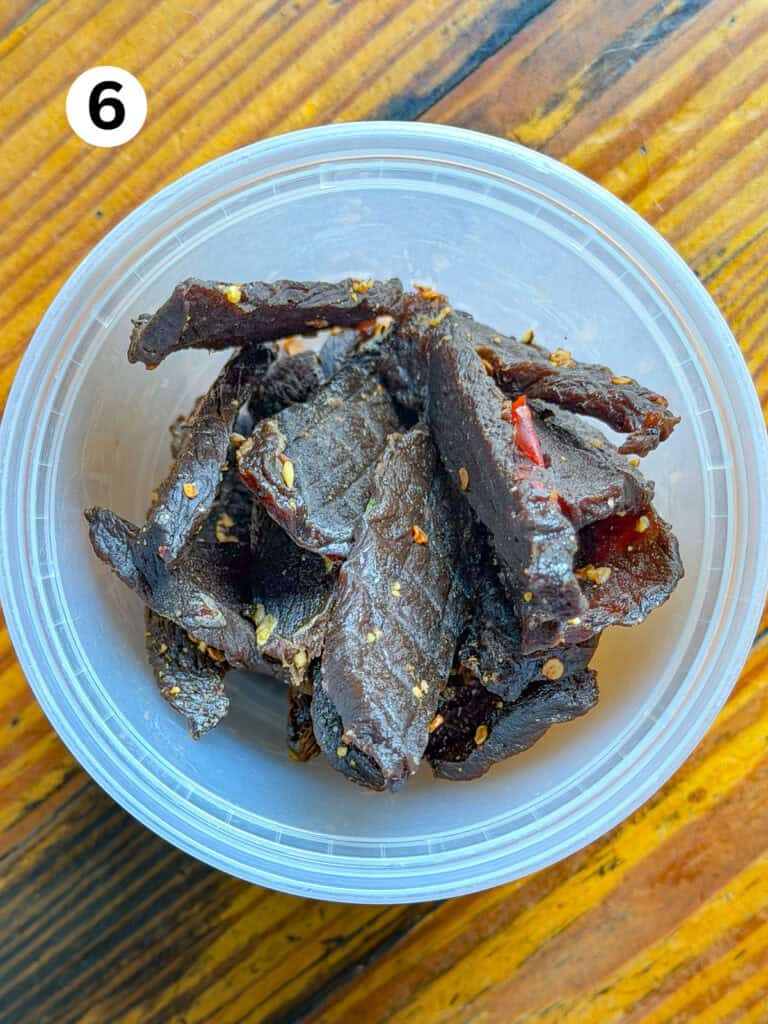
6. Cool and Store. Remove from the dehydrator and let the venison jerky cool completely before storing.
Chef Tips & Troubleshooting
- Know your yield. Three pounds of raw venison dries down to roughly one pound of finished jerky. So don’t expect a huge stockpile from one batch.
- Keep the meat fully submerged. Use a non-reactive container or a zip-top bag that keeps every piece of venison under the marinade while it cures. Pieces that poke above the liquid won’t season or cure evenly. This is equally important as with brining venison.
- Drain the meat before placing it on the trays. After marinating, pull the meat out of the bowl and let the excess marinade drip off, or pat the strips dry with a paper towel, before laying them on the trays. Wet strips take longer to dry and can dry unevenly.
- Use the bend test. Starting around the 3 1/2 hour mark, test the pliability of the jerky. If it’s super flimsy, keep drying. If it’s barely starting to crack when you bend it, its ok to go ahead and pull it. If you like your jerky tough and a little brittle, dry until the meat cracks as soon as you start to bend it.
- Let it cool before you store it. Pull the jerky off the trays and let it come to room temperature before sealing it in a bag or container. Bagging it warm traps steam, which softens the texture. If you actually prefer a slightly moister, chewier jerky, you can bag it warm to help achieve this.
- Condition the batch for better texture. Once cooled, let the jerky rest in a loosely closed jar or other airtight container for 24 hours, shaking it every few hours if possible. This evens out the moisture between pieces so you don’t end up with some strips drier than others.
| Problem | Likely Cause | Fix |
|---|---|---|
| Jerky is too salty | Marinated too long or there is too much salt in the mix | Cut marinade time to the low end of the range (24 hrs) and taste the marinade before adding the meat so you can adjust salt |
| Jerky is brittle or crumbles | Venison sliced too thin, or dried too long, or the heat was too high | Slice closer to ¼ inch and start checking doneness at the 4-hour mark |
| Jerky is tough or hard to chew | Sliced with the grain or dried too long | Slice against the grain for an easier chew, and pull pieces as soon as they pass the bend test |
| Center is still soft or underdone | Slices were uneven, or the trays weren’t rotated | Freeze the roast briefly before slicing for even cuts, and rotate trays halfway through drying |
| White spots on the surface | Salt or fat deposits from the marinade | Usually harmless, just wipe with a damp cloth; however, if it’s fuzzy or colored, it’s best to discard the batch |
| Mold (fuzzy, colored spots) | Moisture trapped during storage or drying | Discard the batch as it isn’t safe to eat or salvage |
Venison Jerky Recipe FAQs
Do I need curing salt to make venison jerky?
No, the curing salt is optional at the 145–155°F range this recipe uses. Instacure No. 1 adds a deeper color, a slight tang, and extends shelf life, so it’s worth using if you’re storing jerky for more than a couple of months or plan to carry it unrefrigerated. Without it, store the jerky in the refrigerator or freezer.
How do I know when venison jerky is done?
Let a piece cool completely and then bend it. Warm jerky always feels softer than it actually is. It’s ready when after cooling, it cracks and shows white fibers at the bend without snapping cleanly in two. If it just bends without cracking, it needs more time.
Can I make venison jerky without a dehydrator?
Yes. Set your oven to 145–155°F, place the strips on a wire rack over a baking sheet, and crack the door open to let moisture escape. It dries a little crisper than a dehydrator batch, but the marinade, slicing, and doneness test are all the same.
How to Store Venison Jerky
- Refrigerator: Keep it in an airtight container for up to 2 months.
- Freezer: For the best results, store the jerky in vacuum-sealed bags and freeze it for up to a year.
- Room temperature or in a hunting pack: Only safe for short trips, light hunting camp meals in the stand, and only if the jerky was cured with Instacure No. 1 and vacuum-sealed. Don’t rely on room-temperature storage for jerky made without curing salt.
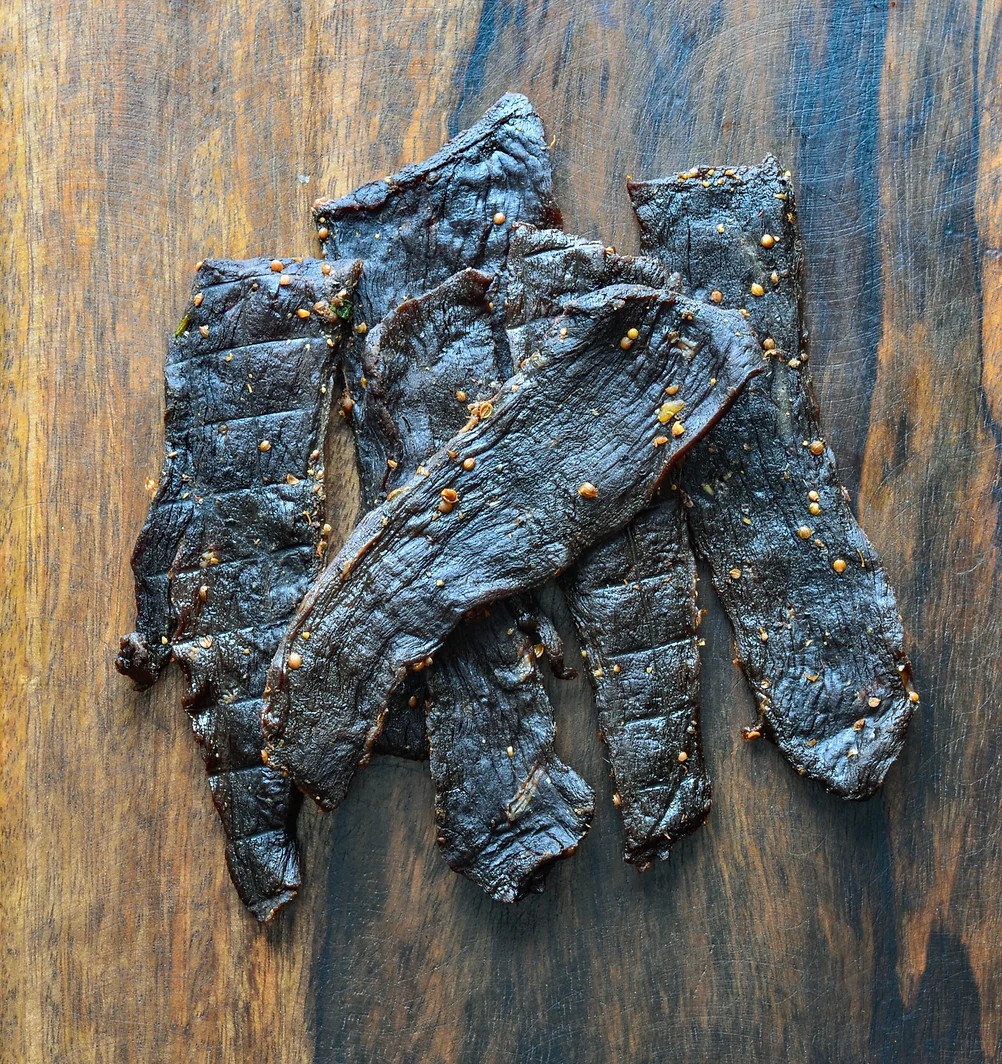
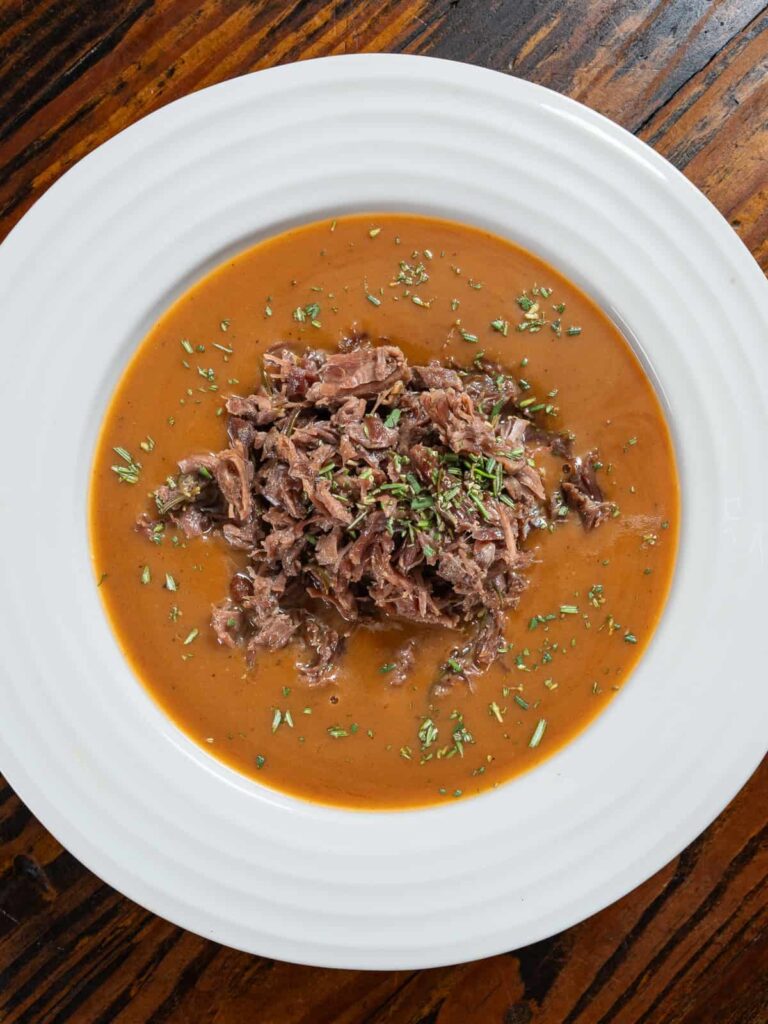
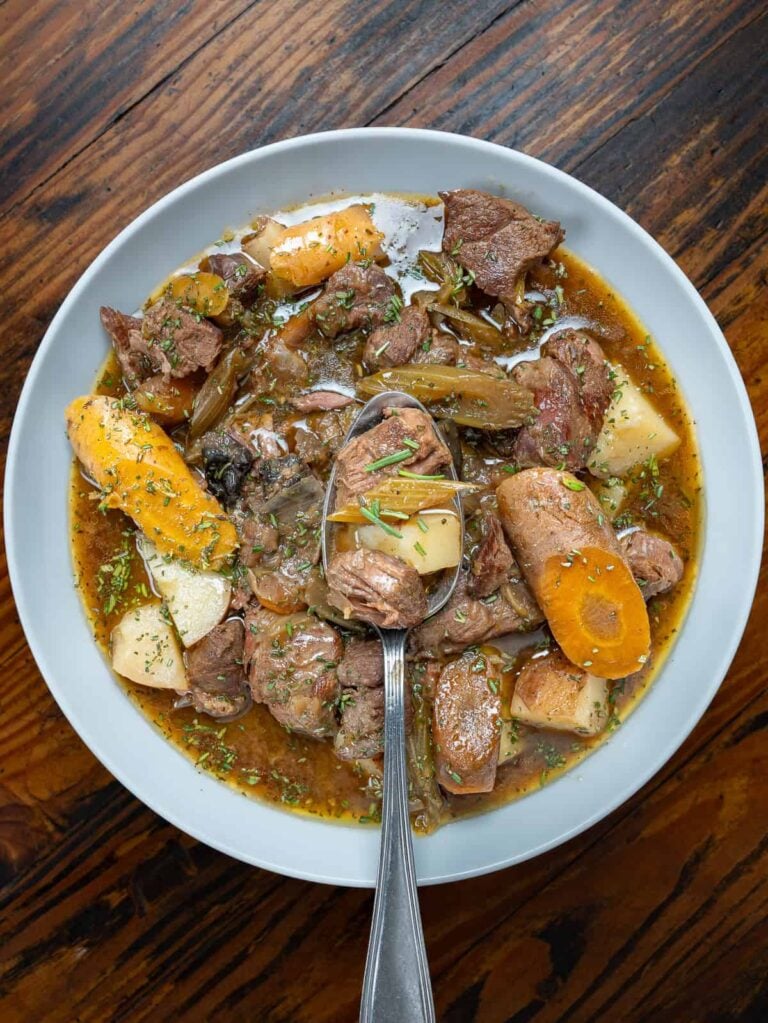
More Venison Recipes
Below are a few of my favorite recipes we keep on rotation throughout the year. If you’re looking for more ideas, browse my full collection of venison recipes or crockpot venison recipes.
Tried this Recipe? Please leave a ⭐⭐⭐⭐⭐ rating in the recipe card below and leave a comment. I love to hear from readers! And if you have any cooking questions or want to share your latest food photos, give me a shout on Instagram at @larry__white.
Venison Jerky Recipe (Sweet & Spicy)
Ingredients
For the Venison
- 3 pounds boneless venison, silver skin removed (top round, bottom round, sirloin or backstrap)
For the Jerky Marinade
- 2 cups apple cider (best you can find)
- ½ cup soy sauce
- ¼ cup chipotles in adobo
- 2 teaspoons lemon juice
- ½ teaspoon minced ginger
- 1 bunch green onions, chopped (green and white parts)
- 5 garlic cloves, chopped
- 1 teaspoon ground coriander
- 1 teaspoon ground black pepper
- 1 tablespoon kosher salt
- 2 tablespoons sugar
- ¾ teaspoon pink curing salt: Instacure Number 1 (optional)
Instructions
- In a non-reactive large bowl add all of the ingredients except the deer meat. Stir until well combined. At this point you can adjust the salt and sugar content to your liking.
- Using a very sharp knife or a meat slicer, cut the venison against the grain or with the grain into 1/8 to 1/4 inch slices.
- Add the sliced venison to the marinade and mix until the meat is thoroughly coated. Pour this mixture into a non-reactive container that is just big enough to hold everything. This ensures that the meat stays submerged. Alternately you can use a gallon freezer ziplock bag as long as the meat stays submerged in the marinade.
- Marinade the venison for 24 to 36 hours.
- Drain the meat and discard any excess marinade. Place the venison strips in a single layer on the dehydrator racks while ensuring they are not touching. You want as much air as possible to circulate all sides of the meat. If you are using your oven, place the meat onto metal wire racks that are inserted into cookie sheet pans.
- Set the dehydrator or oven between 145 and 155 degrees F. The drying time should be roughly between 4-6 hours. Check the meat by bending a few pieces. You’ll know they are ready if they start to break apart while bent.
- You can store the jerky inside of plastic zip-top bags or another airtight container in your refrigerator for up to 2 months. Bring to room temperature before eating.
NOTES
- Marinate it fully submerged. Use a non-reactive container or a zip-top bag that keeps the sliced venison under the marinade so all the pieces cure and season evenly. Marinate for 24 to 36 hours.
- Slice for the chew you want. Cut the venison 1/8 to 1/4 inch thick. Slice across the grain for an easier chew, or with the grain for a firmer jerky texture.
- Drain before drying. After marinating, discard the excess liquid and lay the strips in a single layer, leaving space between them so air can circulate around the meat.
- Dry at low heat. Set the dehydrator or oven between 145 and 155 F and start checking around the 4-hour mark. The jerky is ready when a piece bends and starts to crack or break apart.
- Adjust the heat level. Use more chipotles in adobo for a hotter batch or cut them back for a milder one.
- Use curing salt only if wanted. Pink curing salt No. 1 is optional here, but it helps with color, tangy flavor, and shelf life.
- Store it cold and airtight. Keep the jerky in zip-top bags or another airtight container in the refrigerator for up to 2 months, or freeze it for longer storage. Bring it to room temperature before eating.
Nutrition
Nutrition information is automatically calculated, so should only be used as an approximation. Nutrition is per serving.





1 thought on “Venison Jerky Recipe – Sweet & Spicy”
Sounds delicious! Could this same recipe transfer in the same measurements to be used for ground venison jerky instead?